
How Should Australian Manufacturers Negotiate the 1–5 kg Trial Order Premium for Sea Buckthorn Seed Oil?
A small-lot unit price above your framework price is normal. The goal of the negotiation is not to eliminate the premium—it is to cap it near 10% of the relevant tier and convert it into three things: a credit-back against the first production order, the full document pack you will need at scale (full-panel COA, fatty acid profile, TDS, MSDS), and a written volume ladder with prices. That turns a 1–5 kg trial into pre-production investment rather than a sunk cost.
The premium reflects real costs: line changeover, small-format packaging, testing allocated across a few kilograms, air freight and handling. A supplier who agrees to zero premium on a 1 kg lot is often telling you something about how the sample will be prepared.
What a buyer should actually manage is narrower: the size of the premium, whether it converts into credit, and whether the trial shipment carries the documents that production will require. This article covers the cost structure, the negotiation table, the timeline, the volume ladder and the policy red flags.

Why Does a 1–5 kg Trial Cost More Than Bulk, and Where Does the Premium Come From?
Understanding the cost makes the negotiation easier, because you can argue about magnitude instead of principle.
| Cost element | Why it is higher per kg at 1–5 kg |
|---|---|
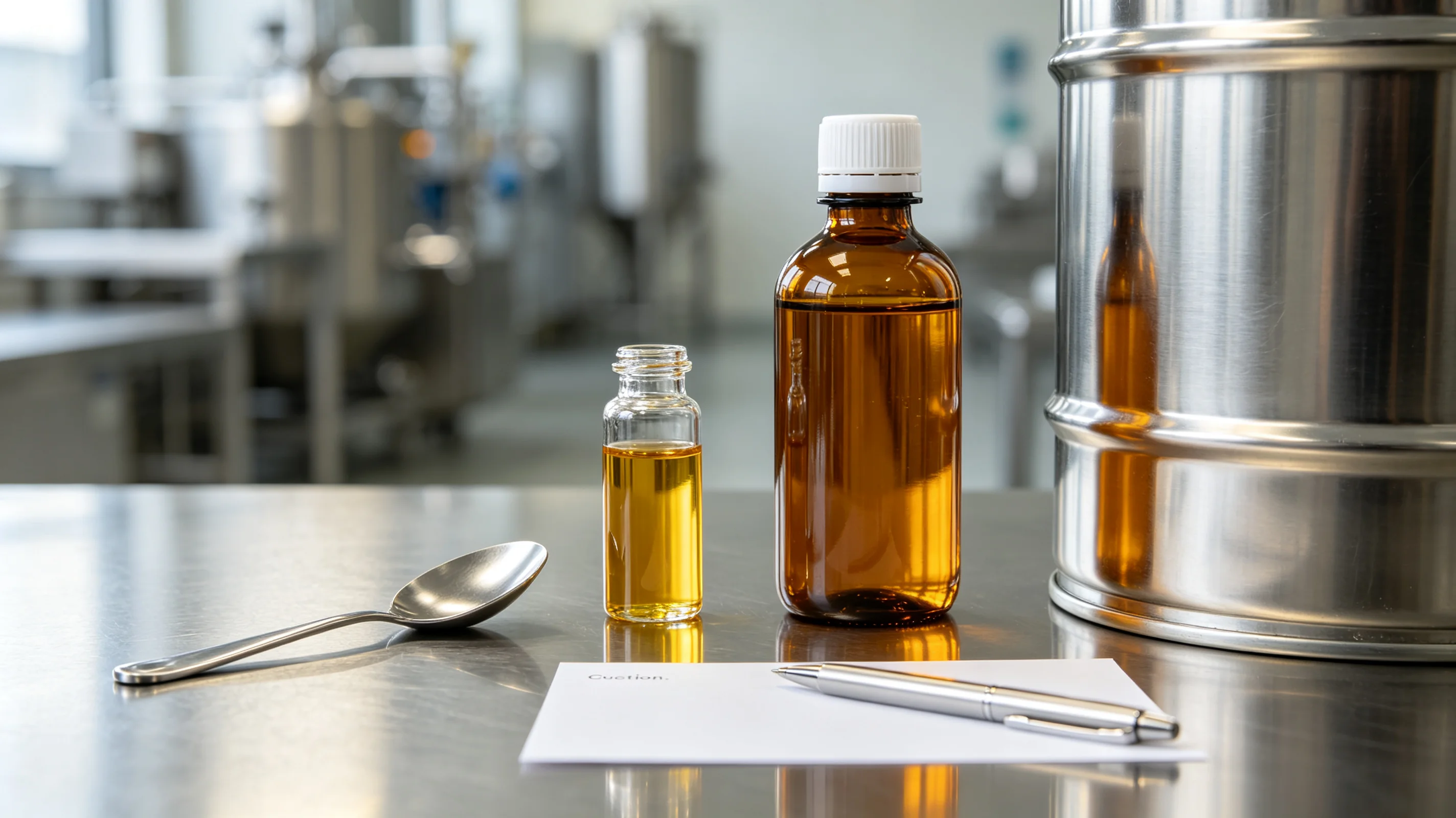
| Line changeover and cleaning | Fixed setup spread over very few kilograms |
| Small-format packaging | Nitrogen-flushed small containers cost more per kg than drums |
| Testing allocation | A full-panel COA costs the same whether the lot is 1 kg or 1,000 kg |
| Freight | Air freight at 3–5 days is far more expensive per kg than sea freight at 14–18 days |
| Handling and documentation | Order processing and export paperwork are largely fixed |
So negotiate magnitude and conversion, not a free kilogram.


What Should a Trial Order Include Besides the Oil?
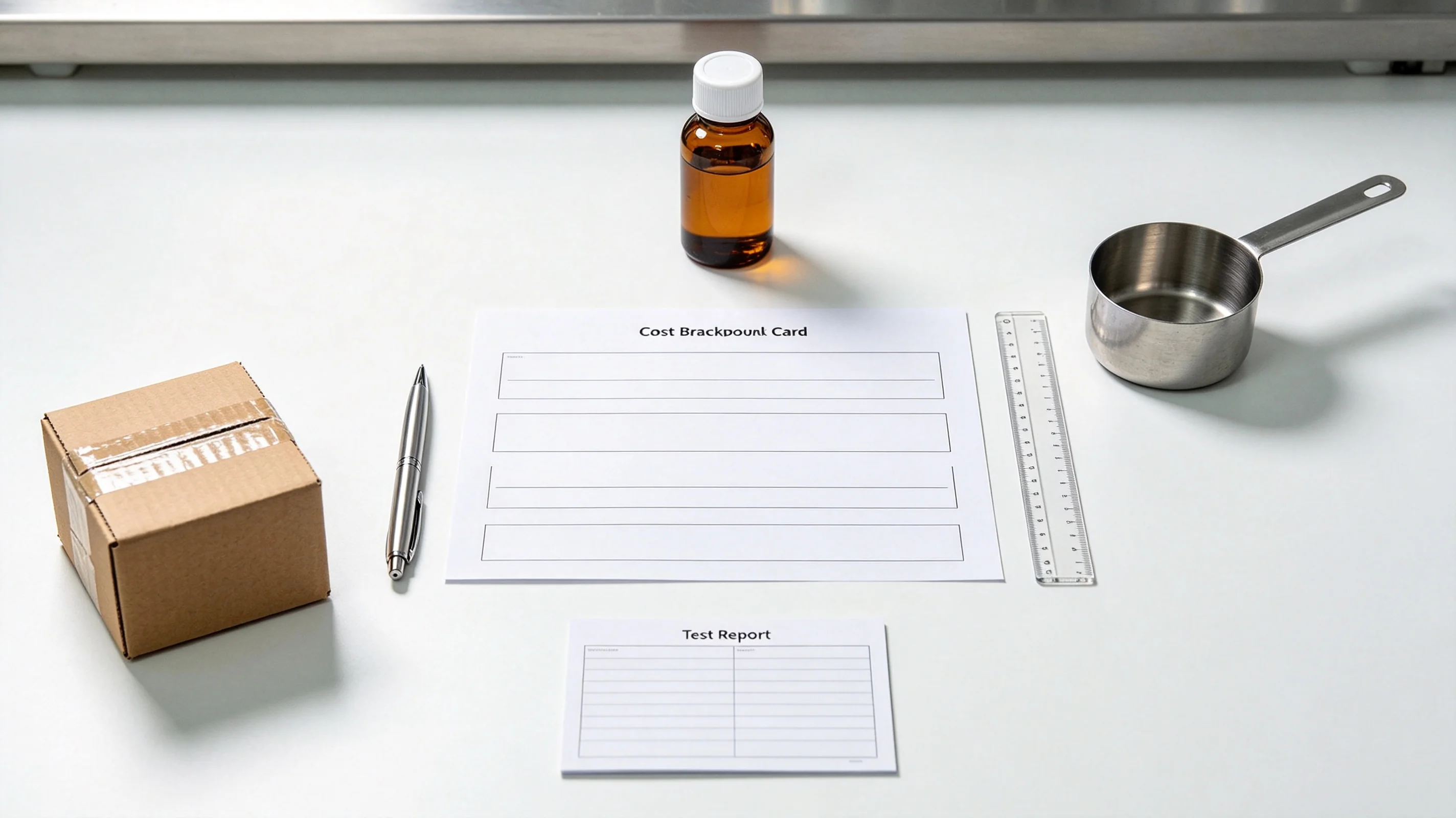
The oil is the least of what you are buying. A trial that arrives without documents wastes your formulation window.
| Deliverable | Why you need it at trial stage |
|---|---|
| Specification sheet | Confirms what you will be held to at scale |
| Batch COA, full panel | Omega-3, omega-6, ratio, PV, AV, metals, microbes |
| Fatty acid profile | Your reference for later adulteration checks |
| TDS (solubility, temperature, odour) | Lets your formulator set process parameters |
| MSDS | Needed for AICIS and internal handling |
| Stability statement | Supports your 24–36 month shelf-life assumption |
| Packaging and storage guidance | Protects PV and colour before use |
| Retain sample arrangement | Lets you retest if the production lot differs |

How Do You Negotiate the Premium and the Credit-Back?
Prioritise in this order: documents first, credit-back second, unit price third.
| Issue | Target | Acceptable | Red flag |
|---|---|---|---|
| Premium over tier price | ≤ 10% | Up to about 10–15% with credit-back | 20–30% with no credit |
| Credit against first bulk order | 100% of trial premium credited | Partial credit | No credit, no discussion |
| Testing cost | Included in the COA | Shared on first lot | Buyer pays separately for every item |
| Freight | Quoted separately and transparently | Air freight at buyer's cost, quoted up front | Freight hidden inside unit price |
| Free sample allowance | Small evaluation sample at 100 g level | Paid sample with credit | No sample at all |
| Second trial lot | At the same trial terms | Slight increase | Second lot repriced at a much higher tier |
| Validity of trial terms | Stated period for using the credit | 6–12 months | No stated validity |

How Should You Structure the Trial Timeline?
Sequence matters because specifications drift with time.
| Stage | Duration | Output | Risk if it slips |
|---|---|---|---|
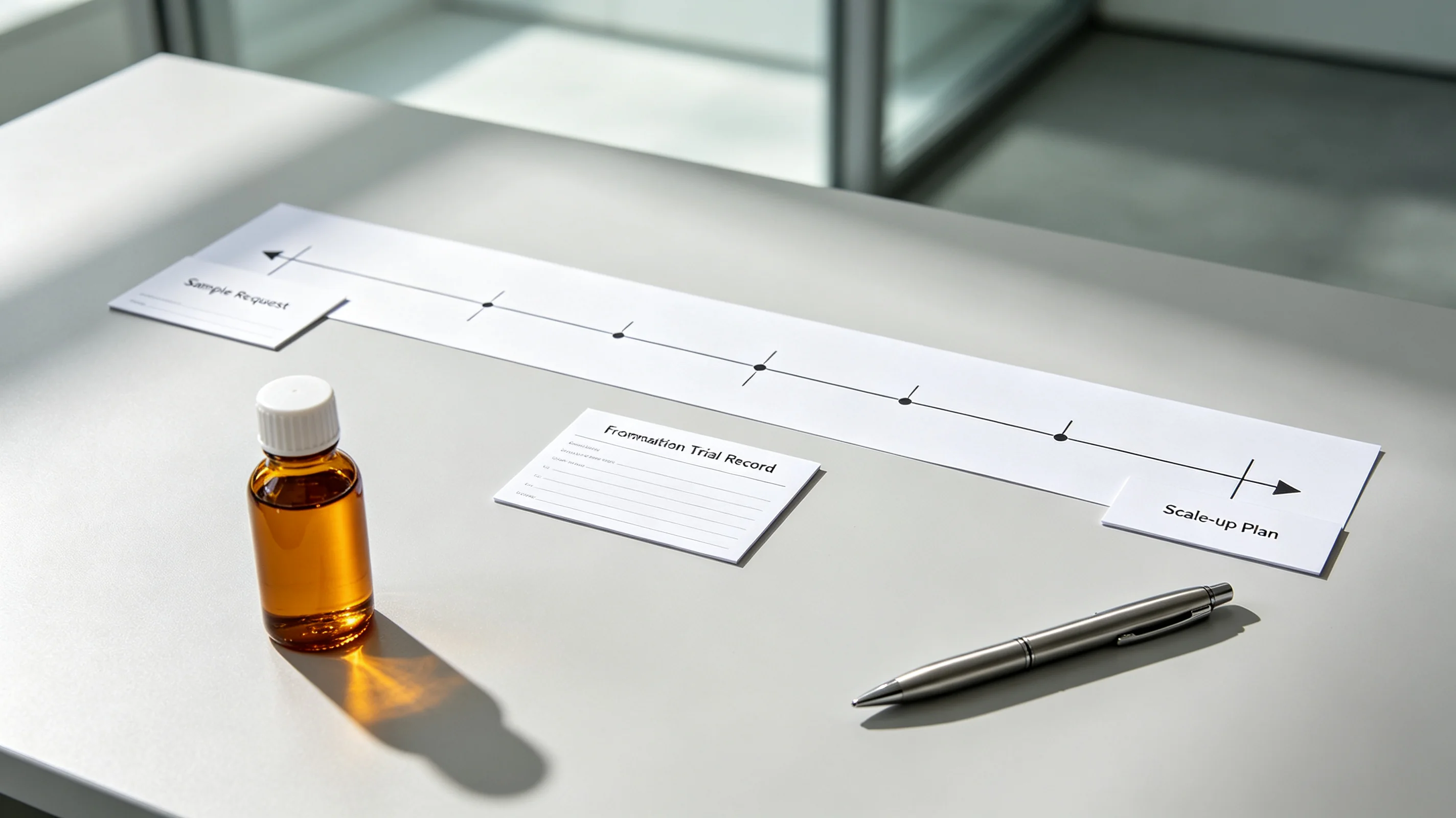
| Request samples from 2–3 suppliers | 3–5 days | Sample set with documents | Comparison delayed |
| Air freight to Australia | 3–5 days | Samples in hand | Formulation window compressed |
| Incoming testing | Days | Verified profiles | Wrong shortlist |
| Formulation trials | 2–4 weeks | Candidate formulation | Launch date moves |
| 1–5 kg confirmation lot | One production cycle | Scale-representative material | Unverified jump to bulk |
| Scale-up to 100–1,000 kg | Per production plan | Commercial batch | Specification drift if too slow |
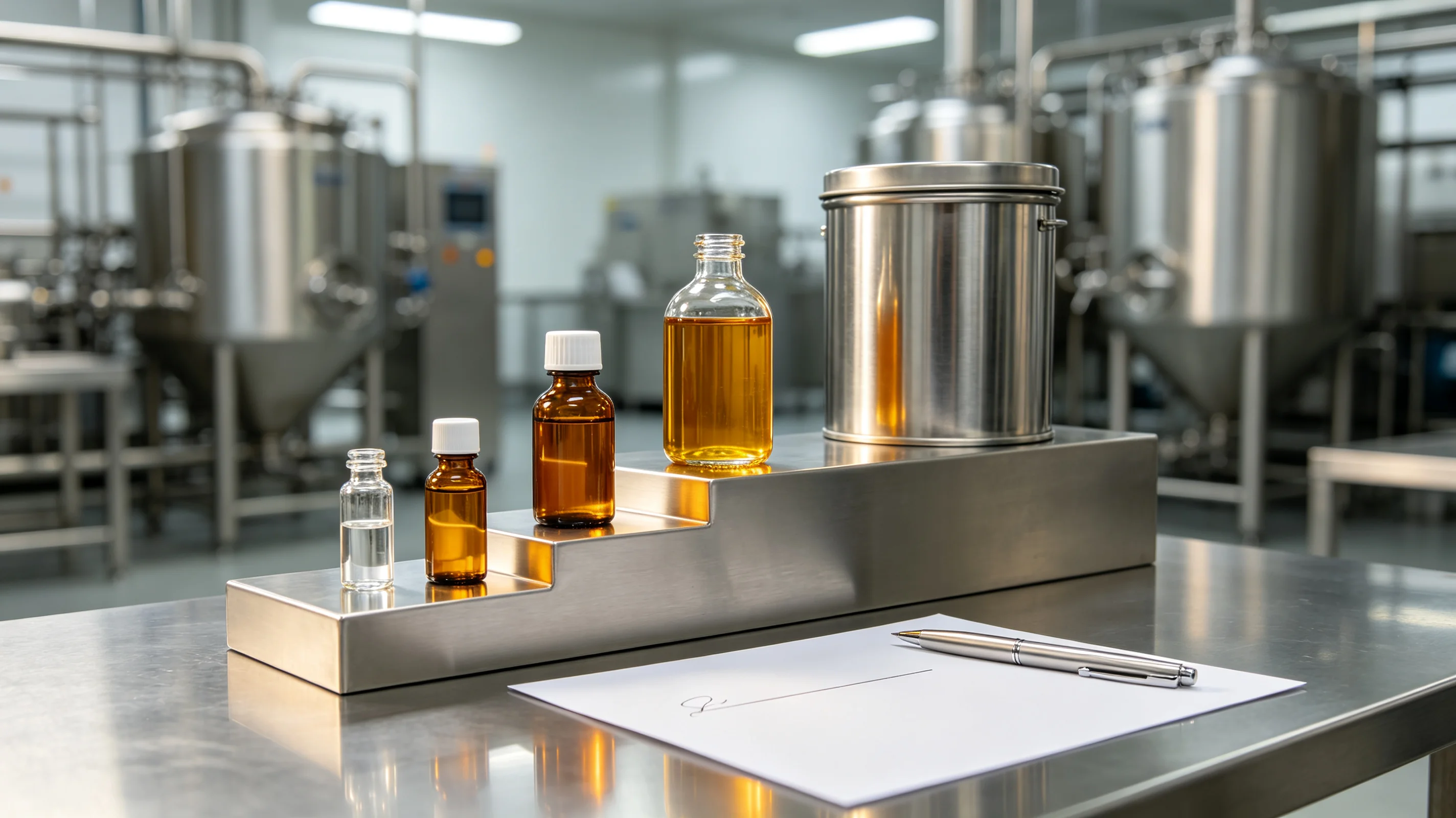
What Volumes Should You Trial Before Scaling?
Move in steps, and make each step earn the next.
| Stage | Volume | What you are validating | Price tier |
|---|---|---|---|
| Screening | 100 g – 1 kg | Odour, colour, basic profile fit | Sample terms |
| Formulation trial | 1–5 kg | Encapsulation behaviour, stability, sensory | Trial tier, premium capped |
| Pilot | Around 25 kg | Repeatability, line behaviour, packaging | Bulk tier |
| Production | 100–1,000 kg | Commercial supply, full documentation | Annual framework, $30–60/kg |
How Do You Turn a Trial Into a Framework Price?
The trial produces data; the data should buy you terms.
Bring four things to the framework conversation: the verified specification range your formulator actually needs, the document list that worked at trial, the volume band you expect across the year, and the delivery rhythm you can plan around (ordering six to eight weeks ahead, with 14–18 days sea freight and 3–5 days air freight for urgent lots).
Then ask for the framework price in AUD with a locked rate, so your landed cost variance stays within the 5% you budgeted, and attach the trial terms as an annex. A framework built on trial data is much easier to defend internally than one built on a brochure.
What Red Flags Should You Watch for in a Supplier's Trial Policy?
Trial behaviour predicts supply behaviour.
| Red flag | What it usually means |
|---|---|
| Refuses orders below a large minimum | Cannot support formulation work |
| Adds 20–30% with no credit-back | Monetising your development risk |
| Sample profile differs from the quoted production spec | Two-tier supply |
| Will not provide a full-panel COA | Documentation will be a problem at scale |
| No retain sample offered | No dispute resolution later |
| No technical input on encapsulation | Limited formulation support |
| Vague lead times | Planning risk once you scale |
FAQ
What premium on a 1–5 kg trial is reasonable? Work in relative terms: aim to cap the premium near 10% of the relevant tier price, with the premium credited against your first production order. Absolute trial prices sit far above framework prices because fixed costs are spread over very few kilograms—that gap is normal; an unexplained premium on top of it is not.
Can the trial cost be credited against the bulk order? It should be. Ask for 100% credit of the premium against the first production order, with a stated validity period. If a supplier will not discuss credit, treat the trial as a purchase rather than an investment.
Are free samples available, and what is the difference? Small evaluation quantities at the 100 g level are commonly provided; formulation quantities of 1–5 kg are normally charged because they come from production. The meaningful distinction is not free versus paid—it is whether the sample comes from the same production route as your bulk supply.
How long from sample request to oil in hand? Allow 3–5 days for sample preparation and 3–5 days for air freight, then your own testing and a 2–4 week formulation window. Build the schedule backwards from the date your formulator needs the material.
How many kilograms should I trial at once? Enough for the formulation work plus retains and a confirmation test—commonly 1–5 kg. Ordering less saves little and often forces a second round, which costs more calendar time than the oil.
What if the trial lot and the production lot do not match? Quarantine, retest against your trial retain, and raise it with both COAs attached. Then require the contract to state that production lots are held to the same specification and production route as the validated trial lot.
Who pays air freight? It should be quoted transparently and agreed before dispatch. Many buyers accept paying air freight on a trial because speed matters, but only when the premium and credit terms are settled at the same time.
Will asking 2–3 suppliers for samples harm the relationship? No, and it is standard practice. Comparing two or three documented samples is normal diligence, and a credible supplier expects it. What harms relationships is sharing one supplier's pricing with another.
Conclusion and Next Steps
A trial is not a discounted first purchase. It is the point where you convert a premium into documents, credit and a volume ladder—and where you find out whether the supplier behaves at 1 kg the way they will behave at 1,000 kg.
Four steps to run it well:
- Define what the trial must validate, then set the quantity (commonly 1–5 kg) from that list.
- Negotiate in order: full document pack first, credit-back second, premium capped near 10% third.
- Plan the timeline around 3–5 day sampling, 3–5 day air freight and a 2–4 week formulation window.
- Convert the result into an annual framework price in AUD, with the trial terms attached as an annex.
Send us your formulation target, trial quantity and timeline, and we will return a trial quotation with the full document pack, a credit-back clause and a volume ladder from 1 kg through to annual framework pricing.
This article was published on 2026-09-08, and last updated on 2026-09-09. The article will be continuously updated.