
How Do UK Blenders Verify Batch-to-Batch Stability and Moisture Control for Monk Fruit Extract?
A UK blender should verify Mogroside V batch-to-batch variance ≤ ±3%, moisture activity Aw ≤ 0.3, micronized particle size D50 ≤ 50 μm, and colour difference ΔE ≤ 2.0 on every incoming batch, using per-batch HPLC testing and a complete COA before the material enters the blending line.
For UK sweetener blend manufacturers, monk fruit extract (Monk Fruit Extract, Mogroside V) is not a finished product—it is a precision raw material that must be mixed with erythritol, stevia, dietary fibre, or protein at exact ratios, often 1:200 to 1:500 of Mogroside V to bulk sweetener. A single percentage point of drift in Mogroside V content, a moisture spike, or an oversized particle distribution will throw the entire blend off specification, waste a production run, and trigger a customer complaint. This guide explains, from the perspective of a China-based monk fruit extract supplier, exactly which stability and moisture parameters a UK blender should lock down, how to verify each batch on arrival, and how to prevent moisture uptake during sea freight and storage.
Mogroside V content naturally fluctuates by ±15% between harvests, so a UK blender must accept whatever the supplier ships. False. While Mogroside V does vary with Guilin's climate, a competent supplier normalises and blends intermediate lots so that the final shipped batch holds within ±3% of the declared specification—and provides a per-batch HPLC report to prove it.
A moisture activity of Aw ≤ 0.3 is only needed for monk fruit extract sold as a finished sweetener, not for a raw material going into a blend. False. Aw ≤ 0.3 is precisely the raw-material spec that matters most, because monk fruit extract is blended with hygroscopic erythritol; if the monk fruit fraction arrives damp, the whole blend will cake and fail flowability during mixing.

1. Why Does Batch-to-Batch Stability of Mogroside V Matter So Much to UK Blenders?
Because monk fruit extract is dosed into a blend at a fixed ratio, any drift in Mogroside V content directly changes the sweetness of the finished blend, forcing the blender to rework the formulation and risking an off-taste product.
A UK blender does not sell "monk fruit extract" to consumers. It sells a ready-to-use sweetener blend whose label promises a specific sweetness intensity and sugar-equivalence. The sweetness of that blend is driven almost entirely by the Mogroside V fraction, which is roughly 200–300 times sweeter than sugar. If the incoming batch of monk fruit extract carries, say, 45% Mogroside V instead of the declared 50%, the blender's fixed 1:250 ratio with erythritol suddenly produces a blend that is noticeably less sweet than the previous production run.
This is why the single most important acceptance criterion for a UK blender is batch-to-batch consistency of Mogroside V content, typically specified as ≤ ±3% variance. In practice, Mogroside V content in the raw fruit does vary with Guilin's growing season, rainfall, and harvest timing—commonly ±5% to ±15% at the crude extract stage. A reliable supplier absorbs this natural variation upstream by normalising, blending, and re-testing intermediate lots, so that what reaches Felixstowe is a controlled, specification-locked batch rather than a raw single-harvest lot.
For the blender, a locked specification has three concrete benefits:
- No reformulation churn—the buyer can keep the same blend recipe and label claims across batches.
- Stable sensory panel results—the 50–100 person taste panels used for each new blend do not need to be re-run because of raw-material drift.
- Lower QC cost—the buyer avoids re-grinding, re-blending, and re-testing caused by an out-of-spec batch.
| Parameter | Specification a UK blender should lock | Consequence of failure |
|---|---|---|
| Mogroside V content | Declared % with variance ≤ ±3% per batch | Sweetness drift, blend reformulation, off-taste complaints |
| Moisture activity (Aw) | ≤ 0.3 | Caking with erythritol, poor flow, microbial risk |
| Particle size (D50) | ≤ 50 μm (micronized) | Re-grinding cost £2–5/kg, "delayed sweetness" in cold drinks |
| Colour difference (ΔE) | ≤ 2.0 | Visible batch-to-batch colour shift in the finished blend |
| Bulk density & flowability | Matched to blend partner powders | Uneven mixing, segregation during filling |
| Microbial limits | Per UK/EU food standards | Rejection, recall risk |
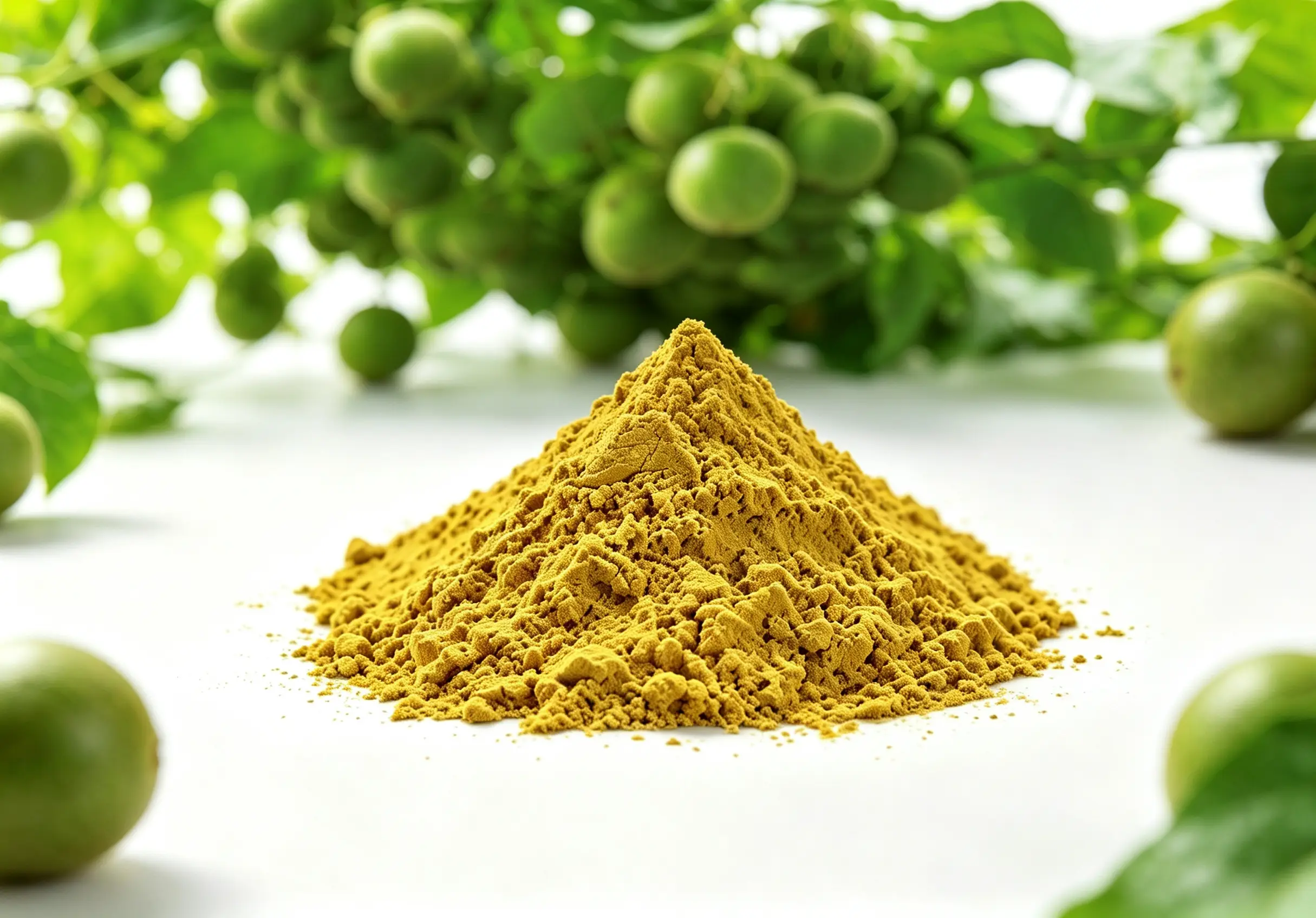
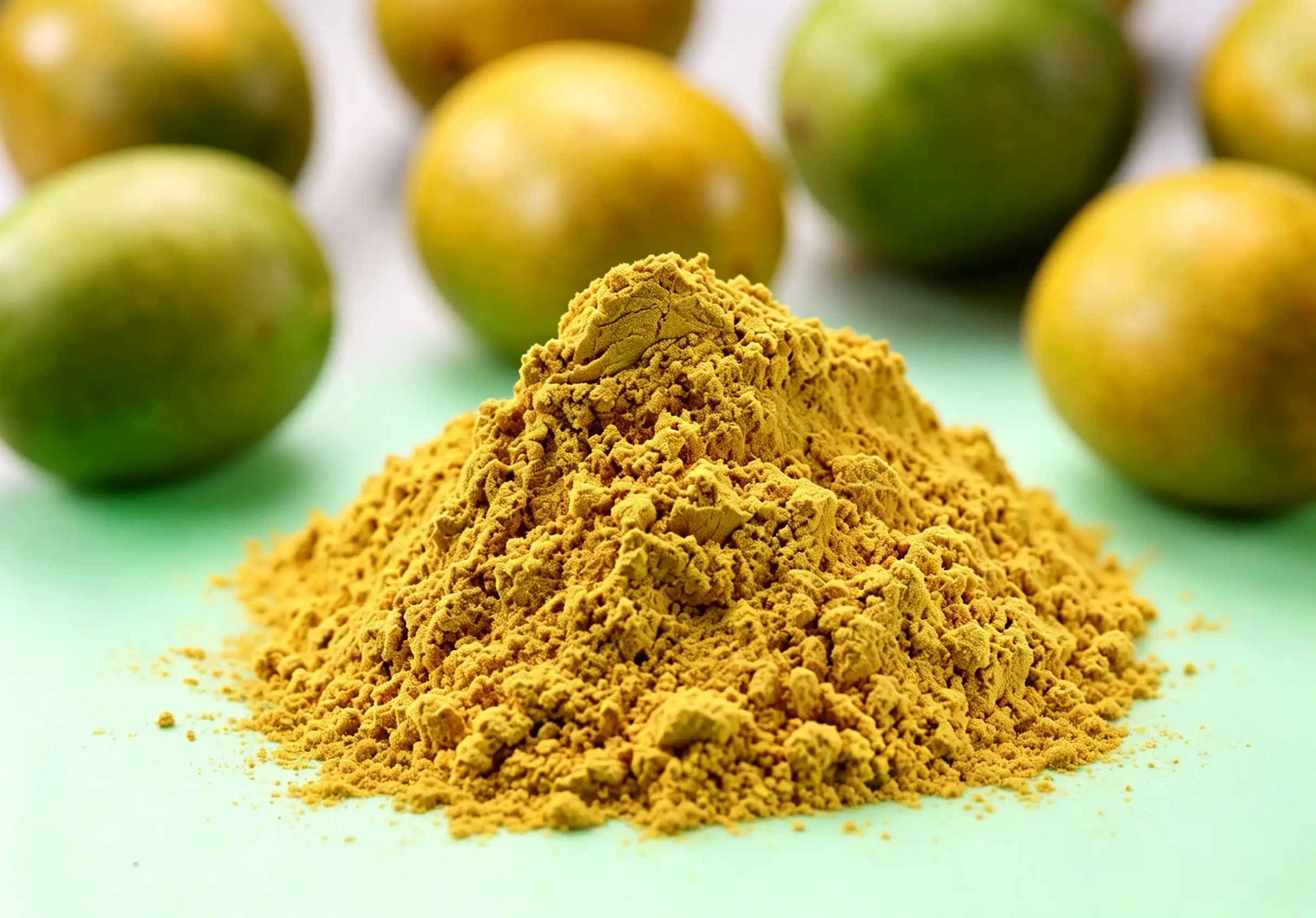

2. What Is the Correct Moisture Control Specification (Aw) for Monk Fruit Extract in a Blend?
The correct specification is moisture activity Aw ≤ 0.3, because monk fruit extract is almost always blended with hygroscopic bulk sweeteners like erythritol, and a damp monk fruit fraction will cause the finished blend to cake.
Moisture activity (Aw, water activity) is not the same as water content (moisture %). Aw measures the "free" water available for microbial growth and chemical reactions, and it is the parameter that predicts whether a powder will absorb moisture from the air, clump, or support mould. For a hygroscopic blend application, Aw matters more than raw moisture percentage.
Erythritol, the most common bulk partner in monk fruit sweetener blends, is itself strongly hygroscopic. When a monk fruit extract arrives with Aw above 0.3, it introduces free moisture into the mixing vessel. The result is predictable and expensive:
- Caking and clumping during mixing, producing an unevenly distributed blend.
- Poor flowability through filling lines, slowing production and causing weight variance in sachets and jars.
- Microbial stability risk in a blend that is otherwise expected to be shelf-stable for 24 months.
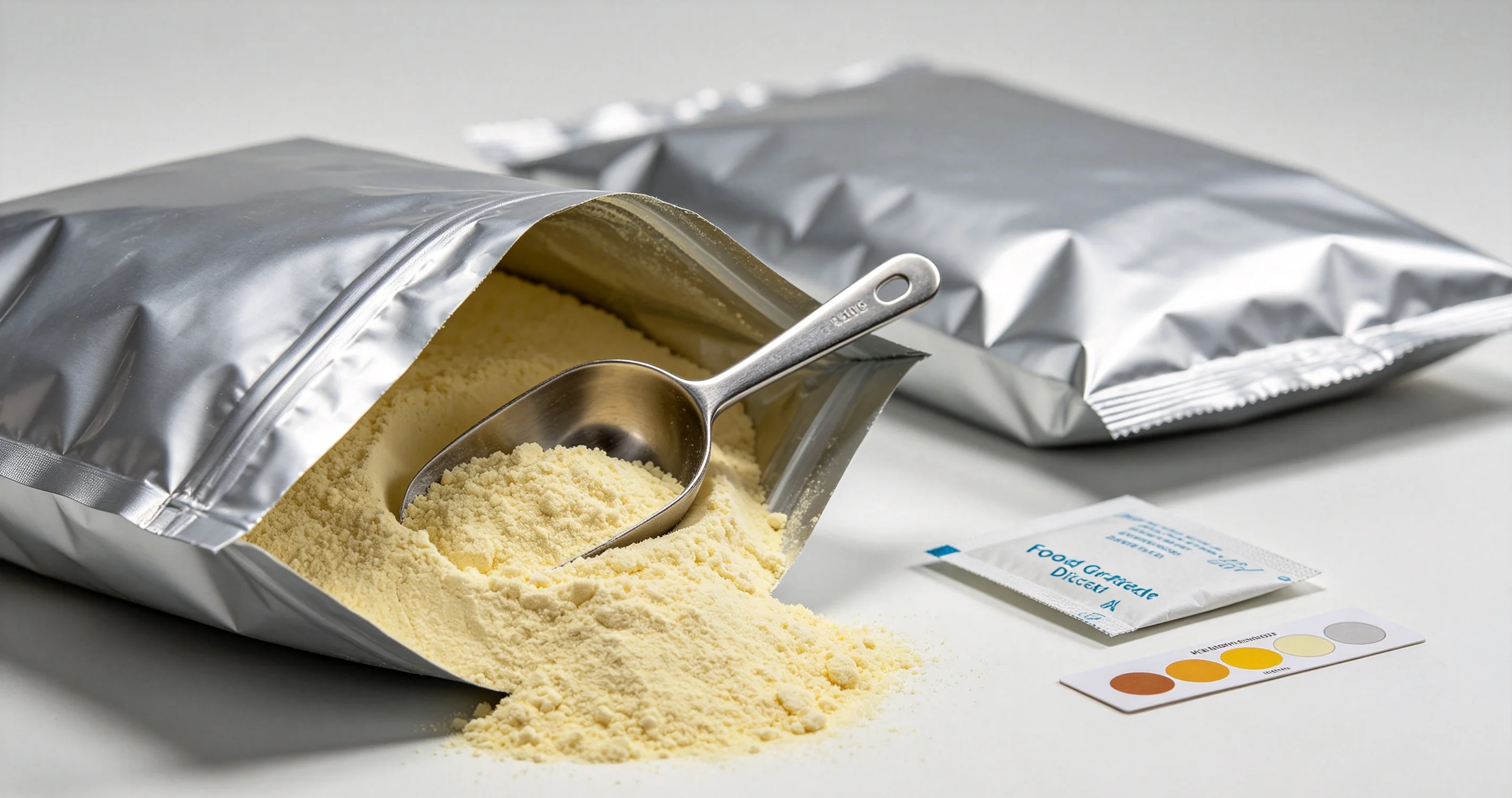
The fix is a two-part discipline on the supplier side: dry the extract to Aw ≤ 0.3 before release, and package it in aluminium-foil barrier bags (which add roughly £2–5/kg but are essential for sea freight and UK warehousing). A UK buyer should never accept a monk fruit extract lot shipped in a simple PE bag with no desiccant, because that material will almost certainly arrive with elevated moisture after 26–32 days at sea.
Moisture Control Acceptance Checklist
- Confirm the COA states moisture activity Aw ≤ 0.3, not just moisture %.
- Verify packaging is a sealed aluminium-foil barrier bag with desiccant sachets.
- Check the bag for any puncture, tear, or broken seal before accepting.
- On arrival, re-test Aw of a representative sample before releasing to the blend line.
- Store in a dry, temperature-controlled area (≤ 25 °C, low humidity) and reseal opened bags immediately.
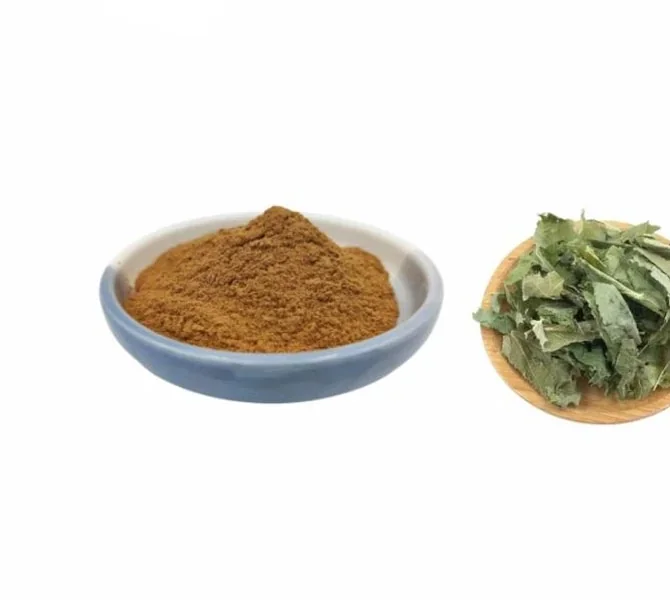

3. Why Does Particle Size (D50 ≤ 50 μm) and Flowability Matter for Blend Uniformity?
Because monk fruit extract is far sweeter than its bulk partners, an oversized or uneven particle distribution will cause segregation and "delayed sweetness", and will force the blender to re-grind the material at an extra £2–5/kg.
Monk fruit extract is typically dosed at 1 part to 200–500 parts of erythritol. At that ratio, the monk fruit particles must be fine enough to disperse evenly through a much larger volume of bulk powder. If the extract arrives as a coarse or irregular powder with D50 above 50 μm, two problems appear:
- Segregation—the heavier or larger monk fruit particles settle or separate from the finer bulk sweetener during blending and filling, so some sachets are over-sweet and others under-sweet.
- Delayed sweetness—coarse monk fruit particles dissolve slowly in cold beverages or yoghurt, producing a "sweetness that arrives late", which sensory panels immediately flag.
The industry standard that UK blenders rely on is a micronized particle size of D50 ≤ 50 μm. A micronized monk fruit extract disperses quickly, dissolves in cold liquid, and blends uniformly without the blender needing to invest in re-grinding (which costs £2–5/kg and risks heating the material). Flowability and bulk density should also be specified and matched to the blend partner powders, because a mismatch in bulk density causes segregation during high-speed filling.
A China-based supplier should provide a particle-size distribution (PSD) report alongside the COA, and the buyer should confirm that the D50 value is measured by laser diffraction, not by a simple sieve that can hide fines.

4. How Should a UK Blender Verify Each Incoming Batch?
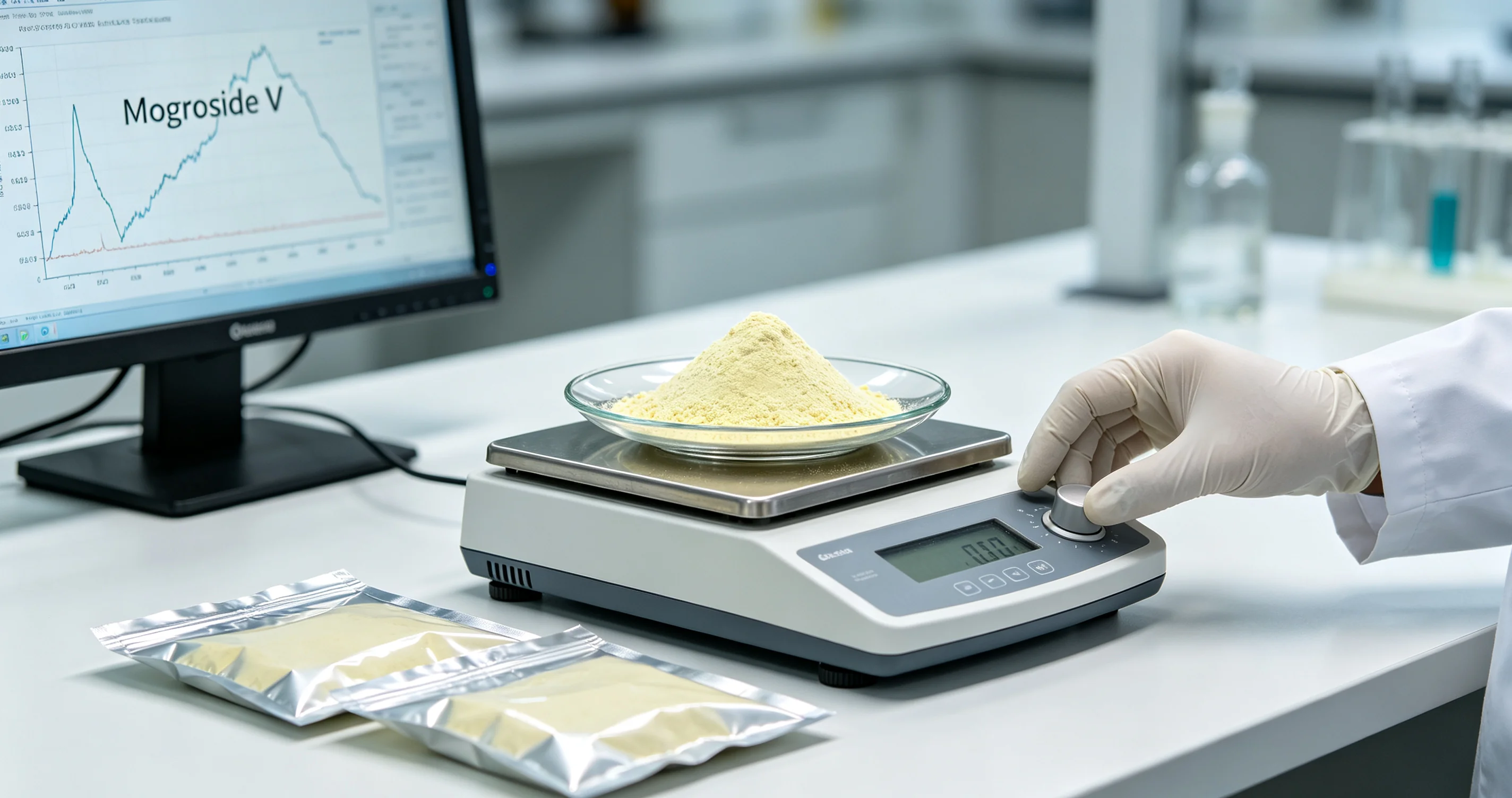
By running a defined per-batch acceptance protocol—HPLC for Mogroside V, PSD for particle size, Aw for moisture, microbial screening, and colour check—before releasing the material to the blending line.
Verification is where a UK blender protects the entire production run. The acceptance protocol should be written into the purchase contract and repeated on every lot, not sampled occasionally. A practical incoming-batch sequence looks like this:
- Document check—confirm the COA, TDS, SDS, Non-GMO statement, and UKRP documentation are complete and match the lot number.
- Visual and seal check—inspect the foil bag for integrity, and check the lot label against the PO.
- HPLC Mogroside V assay—confirm the MV content is within ±3% of the declared specification.
- Particle size (D50)—confirm the micronized D50 ≤ 50 μm by laser diffraction.
- Moisture activity (Aw)—confirm Aw ≤ 0.3.
- Microbial screening—confirm total plate count, yeast & mould, and absence of pathogens within UK/EU limits.
- Colour and odour—confirm ΔE ≤ 2.0 and no off-odour.
- Retention sample—retain a sealed reference sample for at least 12 months for traceability and dispute resolution.
Many UK blenders outsource the analytical work to an accredited laboratory such as SGS UK, at roughly £300–800 per batch. The cost is small relative to the £5,000–20,000 loss from a single failed production run, so skipping the re-test is a false economy.
Incoming Batch Acceptance Protocol
| Step | Check | Pass criterion | Typical method / cost |
|---|---|---|---|
| 1 | Documentation | COA/TDS/SDS/Non-GMO/UKRP complete | Manual review |
| 2 | Packaging | Foil bag sealed, desiccant present | Visual inspection |
| 3 | Mogroside V content | Within ±3% of declared | HPLC assay |
| 4 | Particle size | D50 ≤ 50 μm | Laser diffraction |
| 5 | Moisture activity | Aw ≤ 0.3 | Aw meter |
| 6 | Microbial | Within UK/EU limits | Accredited lab, £300–800/batch |
| 7 | Colour | ΔE ≤ 2.0 | Spectrophotometer / visual |
| 8 | Retention sample | Retained ≥ 12 months | Sealed reference |
5. How Do You Prevent Moisture Uptake During Sea Freight and Storage?
By shipping in sealed aluminium-foil barrier bags with desiccant, controlling container temperature and humidity, and storing in a dry, temperature-stable warehouse with immediate resealing of opened bags.
The journey from a Chinese port to Felixstowe or Southampton takes 26–32 days, during which the container passes through humid, temperature-fluctuating conditions. If monk fruit extract is packed in a non-barrier bag, it will slowly absorb moisture from the air and arrive with Aw well above specification. Prevention is a supplier-side responsibility that a UK buyer should verify, not assume:
- Barrier packaging—ship only in sealed aluminium-foil bags that block moisture vapour transmission; this adds £2–5/kg but is non-negotiable for a hygroscopic blend raw material.
- Desiccant sachets—place food-grade desiccant inside each bag and, ideally, a humidity indicator card.
- Container control—use a dry, clean container and avoid loading during heavy rain; for long or sensitive shipments, consider a desiccant blanket inside the container.
- UK warehousing—store in a dry area at ≤ 25 °C with low humidity, keep bags off the floor on pallets, and reseal any opened bag immediately to stop moisture ingress.
For the buyer, the cheapest insurance is to write "Aw ≤ 0.3 on arrival, verified by re-test" into the purchase contract, so that the supplier—not the blender—owns the moisture risk during transit.
6. How Can a UK Blender Lock in Long-Term Batch Stability?
By qualifying a supplier against a locked specification, insisting on per-batch COA with retention samples, and building a 3–5 supplier pool so that a single lot failure never stops production.
Batch stability is not a one-off test; it is a supplier-management discipline. A UK blender that wants repeatable blends should:
- Lock the specification in the contract—Mogroside V variance ≤ ±3%, Aw ≤ 0.3, D50 ≤ 50 μm, ΔE ≤ 2.0, microbial within UK/EU limits.
- Require per-batch COA and retention samples—so any dispute can be traced back to a specific lot.
- Verify the supplier's quality system—prefer a supplier with BRCGS or FSSC 22000 certification (BRCGS is effectively mandatory for blends sold into Tesco or Asda, and only 20–30% of Chinese plants currently hold it).
- Maintain a 3–5 supplier pool—so a single failing lot does not halt the blending line.
- Schedule ahead—blend production needs material 6–8 weeks in advance, given 26–32 day sea freight and peak-season delays of up to 10–14 weeks.
A supplier that offers a UK local sample warehouse, responds in English within a few hours, and provides a quarterly regulatory brief is a partner that will help the blender keep its production line—and its retailer relationships—running smoothly.
Frequently Asked Questions
Q1. Is a ±5% Mogroside V variation between batches normal and acceptable? No. While ±5% to ±15% variation exists at the crude extract stage, a competent supplier normalises and blends lots so the shipped batch holds within ±3% of the declared specification. A UK blender should reject any lot that drifts beyond ±3%, because it will change the sweetness of the finished blend.
Q2. What is the difference between moisture content and water activity (Aw)? Moisture content is the total water percentage in the powder, while Aw measures the "free" water available for microbial growth and chemical reactions. For a hygroscopic blend, Aw ≤ 0.3 is the decisive parameter, because it predicts caking and mould risk better than raw moisture percentage.
Q3. Why does monk fruit extract need a micronized D50 ≤ 50 μm? Because it is dosed at 1:200 to 1:500 into bulk sweeteners. A coarse or uneven particle size causes segregation, "delayed sweetness" in cold drinks, and forces the blender to re-grind at £2–5/kg. Micronized powder disperses and dissolves uniformly.
Q4. How long should a UK blender retain a reference sample? At least 12 months. The retention sample is the evidence base for traceability and dispute resolution if a later blend fails or a customer complains.
Q5. What happens if an incoming batch fails the Aw test? The blender should quarantine the lot, document the failure against the purchase contract, and file a claim with the supplier. If "Aw ≤ 0.3 on arrival" is written into the contract, the supplier—not the blender—owns the moisture risk and the rework or replacement cost.
Q6. Does the supplier need BRCGS, or is FSSC 22000 enough? For blends sold into UK retail, BRCGS is effectively mandatory—not just FSSC 22000—and only 20–30% of Chinese plants hold it. A blender should prefer a BRCGS-certified supplier and verify the certificate's authenticity.
Q7. What packaging should monk fruit extract ship in? Sealed aluminium-foil barrier bags with food-grade desiccant and a humidity indicator. Simple PE bags with no desiccant will almost certainly arrive with elevated moisture after 26–32 days at sea.
Conclusion and Next Steps
For a UK sweetener blender, monk fruit extract is only as good as its batch-to-batch consistency. The three parameters that protect a blend—Mogroside V variance ≤ ±3%, moisture activity Aw ≤ 0.3, and micronized particle size D50 ≤ 50 μm—should be locked into the purchase contract and verified on every incoming batch with HPLC, an Aw meter, and a PSD report.
If you are a UK blender or seasoning company sourcing monk fruit extract, take these next steps: request a complete specification sheet (Mogroside V %, D50, Aw, bulk density, flowability) and a sample COA for review; ask for a micronization and moisture-control report; confirm the supplier's BRCGS/FSSC certification and UKRP documentation; and agree a per-batch acceptance protocol with retention samples before your first order. As a China-based monk fruit extract supplier, I can provide specification-locked lots, per-batch HPLC and PSD reports, aluminium-foil barrier packaging, and a UK local sample warehouse to keep your blending line running to a repeatable standard.
This article was published on 2026-09-06, and last updated on 2026-09-09. The article will be continuously updated.