
How Should Australian Manufacturers Read and Verify the Omega-3 ≥30% and Omega-3:Omega-6 ≈1:1 Spec on Sea Buckthorn Seed Oil?
Do not treat omega-3 ≥ 30% as a single acceptance line. Read it together with omega-6 at 30–38% and the omega-3:omega-6 ratio near 1:1, then anchor all three in three executable actions: a contract tolerance of ≤ ±3% batch-to-batch variance, full-panel incoming retesting (PV < 10, AV < 4, heavy metals, microbiology, 400+ pesticide residues), and 24-month retain samples as your dispute evidence.
For a raw material buyer, a specification is not a marketing number—it is your formulation's first-pass yield. When batch omega-3 drifts beyond ±3%, the damage is not a decimal on a certificate; it is a reformulation that can cost somewhere between AUD 5,000 and AUD 20,000 and a production slot you cannot recover.
The most common mistake we see from Australian buyers is reading only the omega-3 figure. They receive an oil that technically "hits 30%" while the omega-6 content and the ratio sit outside the profile their formulation was built around. This guide gives you the reading method, the acceptance workflow, the contract tolerances and the exception path.

What Do Omega-3 ≥30%, Omega-6 30–38% and the ≈1:1 Ratio Actually Mean?
Three numbers travel together, and they only make sense together.
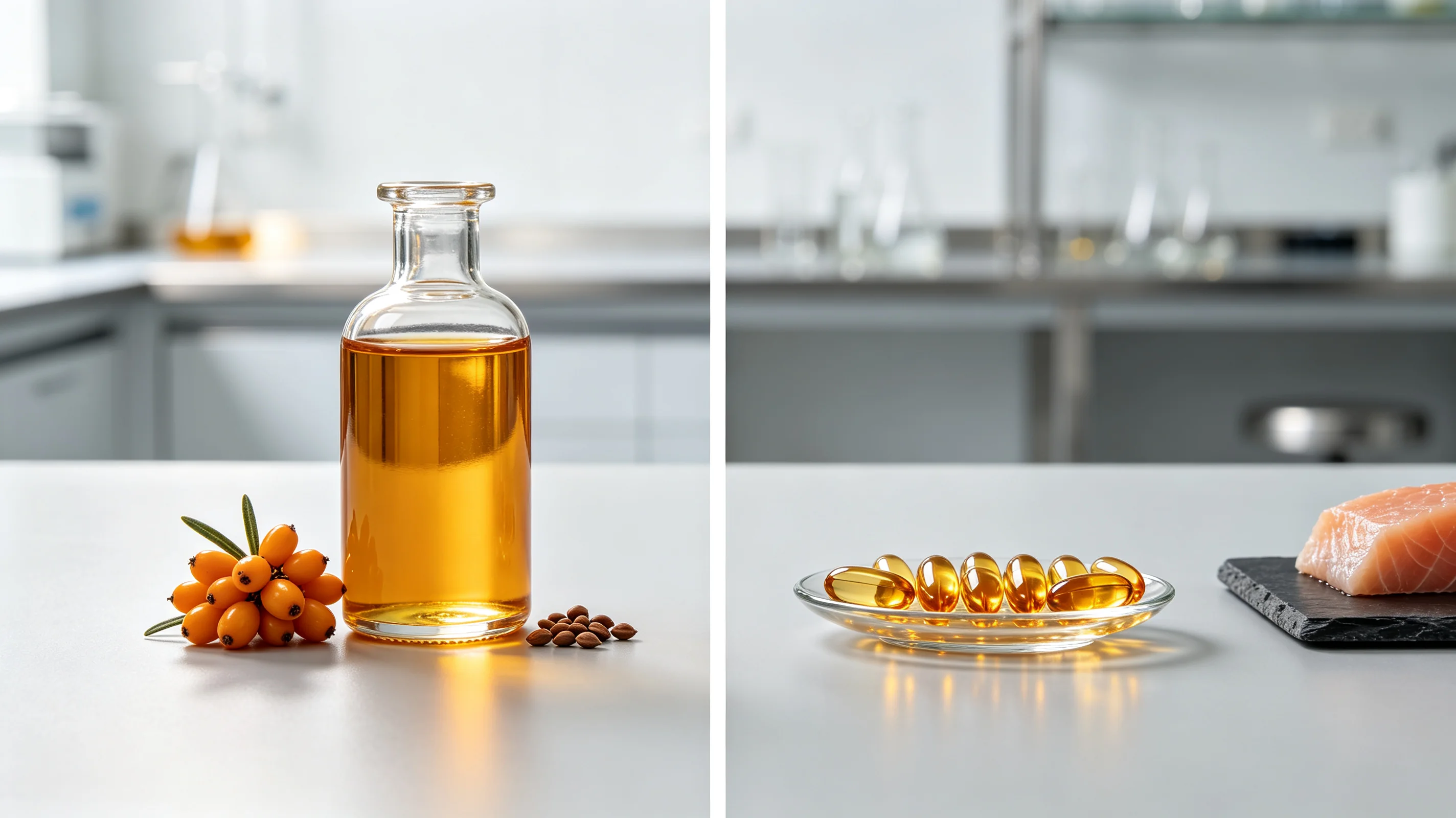
Omega-3 ≥ 30%. In sea buckthorn seed oil this is alpha-linolenic acid (ALA) dominant plant omega-3. It is not EPA and it is not DHA, and any document that blurs that distinction creates a downstream claim problem you will have to unwind with your sponsor.
Omega-6 at 30–38%. Predominantly linoleic acid. It is not a filler number—it is half of the balance story and it materially affects oxidative behaviour during storage and encapsulation.
Omega-3:omega-6 ≈ 1:1. This is the unusual part. Most commercial seed oils are heavily omega-6 skewed, so a near-balanced ratio is both a technical talking point and the evidence base for an "omega balance" narrative. If your omega-3 is 30% but your omega-6 sits far outside 30–38%, the ratio collapses and the story with it.
Read all three or read none. An oil that satisfies one number while drifting on the other two will constrain both your formulation and your claims.
Why Does the Ratio Matter More Than Any Single Number?
The ratio earns its place in the specification for three practical reasons.
Formulation. Fatty acid profile drives oxidative behaviour, which drives shelf life. A batch with the right omega-3 but a skewed ratio can behave differently in encapsulation and in a topical base, even when the headline number looks identical.
Claims. Your ability to talk about omega balance rests on the ratio, not on a single fatty acid. If the ratio moves, the claim moves with it—and so does your TGA submission wording.
Procurement intelligence. Ratio drift is often the earliest signal of blending, a change of raw material origin, or a fruit oil addition. Buyers who trend the ratio across batches catch problems while they are still cheap; buyers who only log omega-3 usually find out at encapsulation.

How Do You Read a Fatty Acid Profile on a COA Without Being Misled?
Ask for the full fatty acid profile, not a summary line, and check three things: that the reported components are individually listed, that the basis of calculation is stated, and that the values are batch measurements rather than typical values carried over from a previous lot.
Where "omega-3 ≥ 30%" can be quietly overstated
Three patterns account for most of the surprises:
Partial reporting. Only ALA is listed, while total omega-3 is implied but never stated. Insist on total omega-3 with the contributing components shown.
Inconsistent basis. Values calculated against different normalisation bases are not comparable between suppliers, and sometimes not even between batches from the same supplier. Require the method to be stated on the COA.
Typical values presented as batch values. A "typical" figure is a marketing average. What you need is the measured result for the lot in the drum, traceable to a batch number that also appears on the packaging and on your retain sample.
Your countermeasure is simple and unglamorous: batch-measured values, a stated method, and agreement with your own retain sample.
How Do You Verify the Spec on Arrival in Australia?
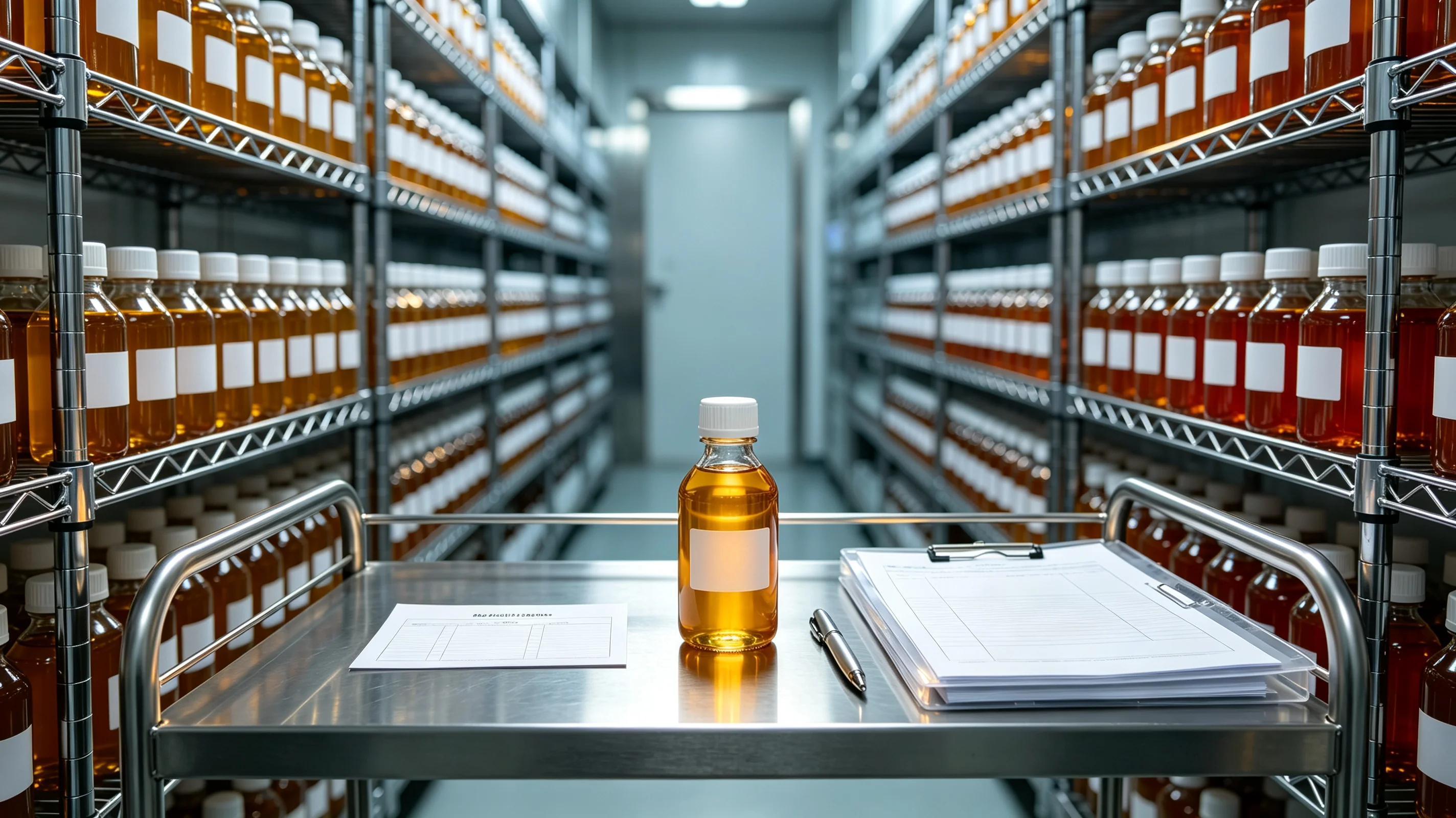
Verification is a workflow, not a single test. Five steps cover it.
| Step | Action | Owner | Release condition |
|---|---|---|---|
| 1 | Document check: COA, batch number, MSDS, packing list, origin | Buyer | Batch number on COA matches drum |
| 2 | Condition check: seals, nitrogen-flushed packaging, odour, colour | Warehouse | No damaged seal, no rancid note |
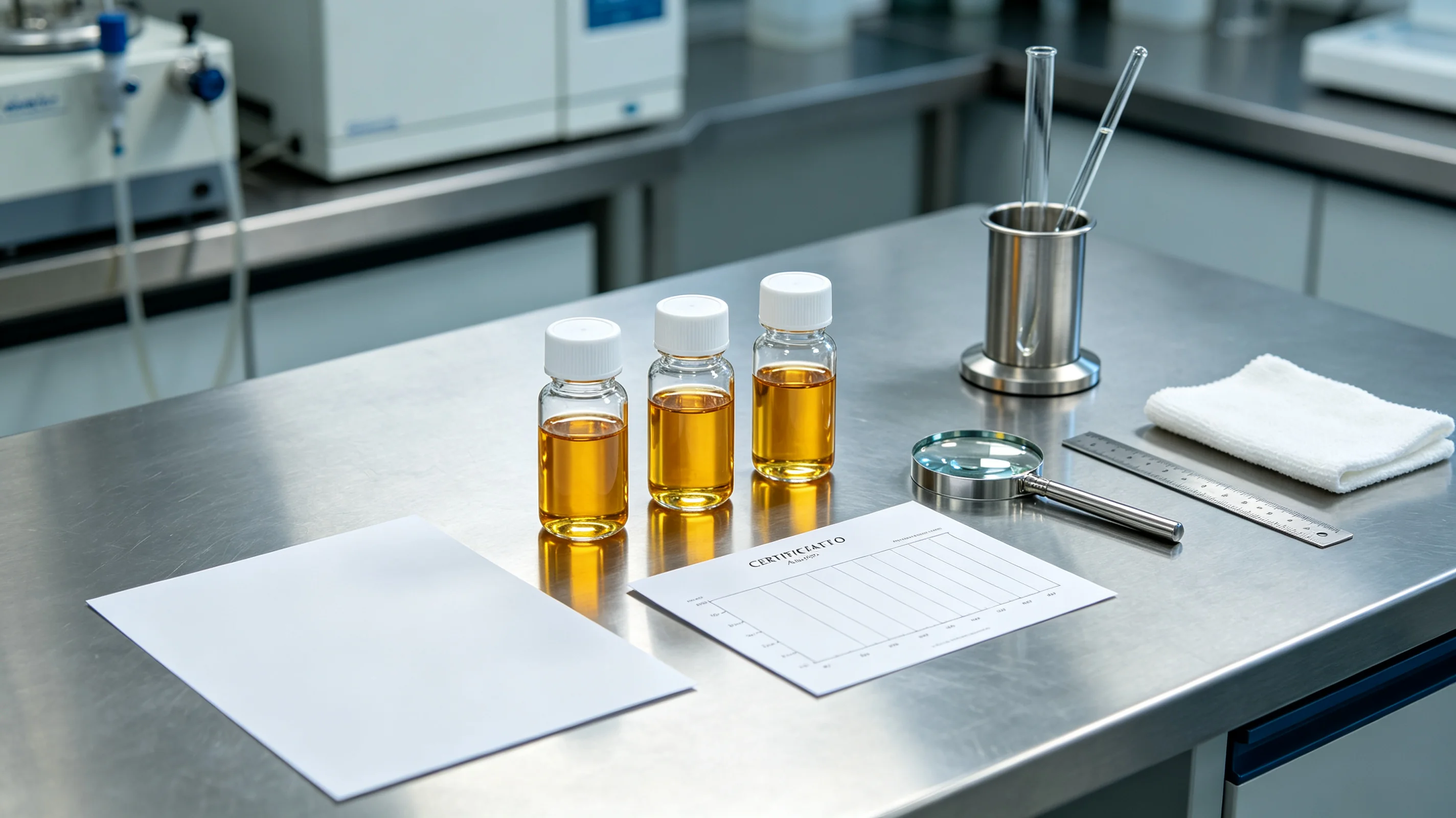
| 3 | Sampling under controlled conditions, light and heat protected | QA | Representative sample retained |
| 4 | Third-party retest (SGS or equivalent), budget AUD 300–800 per batch | QA / lab | PV < 10, AV < 4, omega-3 within tolerance |
| 5 | Retain sample sealed and logged for 24 months | QA | Retain linked to batch and PO |
On logistics, plan around real conditions: sea freight of 14–18 days, ordering lead time of six to eight weeks, and a safety stock of 20–30 days. Those numbers decide whether a failed batch becomes a quality incident or a production stoppage.
Which Tolerances Should You Write Into the Contract?
Tolerances belong in the contract, not in an email thread. This is the block we recommend Australian buyers start from.
| Parameter | Target | Tolerance / limit | If out of range |
|---|---|---|---|
| Omega-3 (total) | ≥ 30% | Batch variance ≤ ±3% | Retest; reject if confirmatory result still out |
| Omega-6 | 30–38% | As agreed in RFQ | Review ratio impact before acceptance |
| Omega-3 : omega-6 | ≈ 1:1 | As agreed in RFQ | Reject or concession with formulation sign-off |
| Peroxide value (PV) | < 10 meq/kg | Hard limit | Reject; oxidation risk |
| Acid value (AV) | < 4 mg KOH/g | Hard limit | Reject or concession after review |
| Heavy metals | Pb, As, Hg each < 0.1 mg/kg | Hard limit | Reject; no concession |
| Microbiology | Within agreed limits | Hard limit | Reject |
| Pesticide residues | 400+ item screen | Screen present | Reject if screen missing |
| Colour difference | ΔE ≤ 2 | As agreed | Concession for topical, reject for capsules if visible |
| Odour | Agreed reference | Reference sample | Reject if rancid |
How Do You Rule Out Fruit Oil Adulteration?
Fruit oil costs less than seed oil and is sometimes blended in without disclosure. The fatty acid profile gives it away.
| Signal | Sea buckthorn seed oil | Sea buckthorn fruit oil |
|---|---|---|
| Omega-7 (palmitoleic acid) | Low | Markedly higher |
| Omega-3 : omega-6 | Near 1:1 | Skewed, not near 1:1 |
| Colour and odour | Lighter, mild seed note | Deeper orange, stronger fruity note |
| Typical positioning | Plant omega-3, omega balance | Omega-7, skin and mucosal care |
Why it matters commercially: a fruit-oil blend breaks the ratio, so your omega balance claim loses its evidence, and a pharmacy or retailer audit that finds an undisclosed blend costs you far more than the oil ever saved.
How Does the Spec Translate Into Your Formulation?
Specifications only matter when they change what you can make and say.
Soft capsules. At a 500 mg fill, omega-3 content determines the active load per capsule and therefore the capsule count per daily serve. A two-point drift in omega-3 changes either your serve size or your label number, and both are expensive to change after artwork is printed.
Topical oils. Ratio and oxidative stability drive skin feel and shelf life. Here colour difference (ΔE ≤ 2) matters more than in capsules, because the product is visible in the bottle.
What to demand in the TDS. In English, with solubility, temperature tolerance, odour and colour parameters. Without those, your formulator is guessing at encapsulation behaviour and heat exposure limits.
Work in ranges. Give your supplier an acceptable range agreed with your formulator, not a single ideal value. Suppliers can hit ranges consistently; single targets invite marginal batches and arguments.
What Do You Do When a Batch Misses the Spec?
A defined exception path turns a bad batch from a crisis into a process.
| Stage | Action | Timeframe |
|---|---|---|
| 1 | Quarantine the lot, do not issue to production | Immediate |
| 2 | Retest, including against your previous retain sample | Within days |
| 3 | Notify supplier with COA, test report and retain reference | Immediate |
| 4 | File claim; agree replacement, credit or concession | 5–10 working days |
| 5 | Score the supplier in the quarterly review | Quarterly |
| 6 | Activate an alternative supplier if the pattern repeats | As needed |
FAQ
How is omega-3 ≥ 30% calculated, and what should I ask for? Ask for total omega-3 with the contributing fatty acids listed individually, plus the stated method and basis of calculation on the COA. Batch-measured values only—typical values are not acceptance evidence.
How much deviation from the ≈1:1 ratio is acceptable? Agree it numerically before you order. In practice, buyers tie the ratio to the same ±3% batch variance discipline used for omega-3 and set the acceptable band with their formulator, rather than leaving it as the word "approximately".
Do I need third-party testing on every batch? For a new supplier, yes. Once a track record exists, many buyers move to periodic verification plus full documentation, but high-value or high-risk lots still justify a full retest. Budget AUD 300–800 per batch when you do.
If the COA and my test differ by 2%, is the batch non-conforming? It depends on your contract. If the tolerance is written as ±3% batch variance and the retest confirms the deviation, the batch is out of specification. If your contract is silent, you are negotiating instead of enforcing.
How can I tell if fruit oil has been blended in? Check omega-7 against your reference lot and look at the ratio. A materially higher omega-7 with a skewed omega-3:omega-6 ratio is the classic signature. Confirm with the full fatty acid profile and, if needed, a retest of your retain sample.
How should I set the colour difference standard? ΔE ≤ 2 is a workable starting point for batch-to-batch consistency. Capsule applications are less forgiving than topical oils if the shift is visible through the shell.
My 1–5 kg trial met spec but the production lot did not. What now? Quarantine, retest against the trial retain sample, and raise it as a claim with both COAs attached. Then require the supplier to state how production lots are held to trial-lot specification in the contract.
How long should retain samples be kept, and how? Twenty-four months, sealed, light and heat protected, logged against batch number and purchase order. An unlabelled jar in a warm warehouse is not evidence.
Conclusion and Next Steps
Reading the specification correctly means refusing to look at omega-3 in isolation, and verifying it means moving the discipline out of the COA and into your contract, your incoming workflow and your retain library. Suppliers honour what is written; buyers enforce what they measured.
Four steps to put this in place:
- Put omega-3 ≥ 30%, omega-6 30–38%, the ≈1:1 ratio and a ≤ ±3% batch variance tolerance into your RFQ as one block.
- Fix your incoming retest panel and laboratory, and budget AUD 300–800 per batch.
- Stand up 24-month retain samples and a batch-to-origin traceability table.
- Replace every ideal value with an acceptable range agreed with your formulator.
Send us your target spec, annual volume band and current acceptance criteria, and we will return a batch COA example, a full fatty acid profile and a contract-ready specification block you can send straight to your QA team.
This article was published on 2026-09-08, and last updated on 2026-09-09. The article will be continuously updated.