
How Do You Position Plant-Based Omega-3 Sea Buckthorn Seed Oil Against Fish Oil for an Australian Private Label?
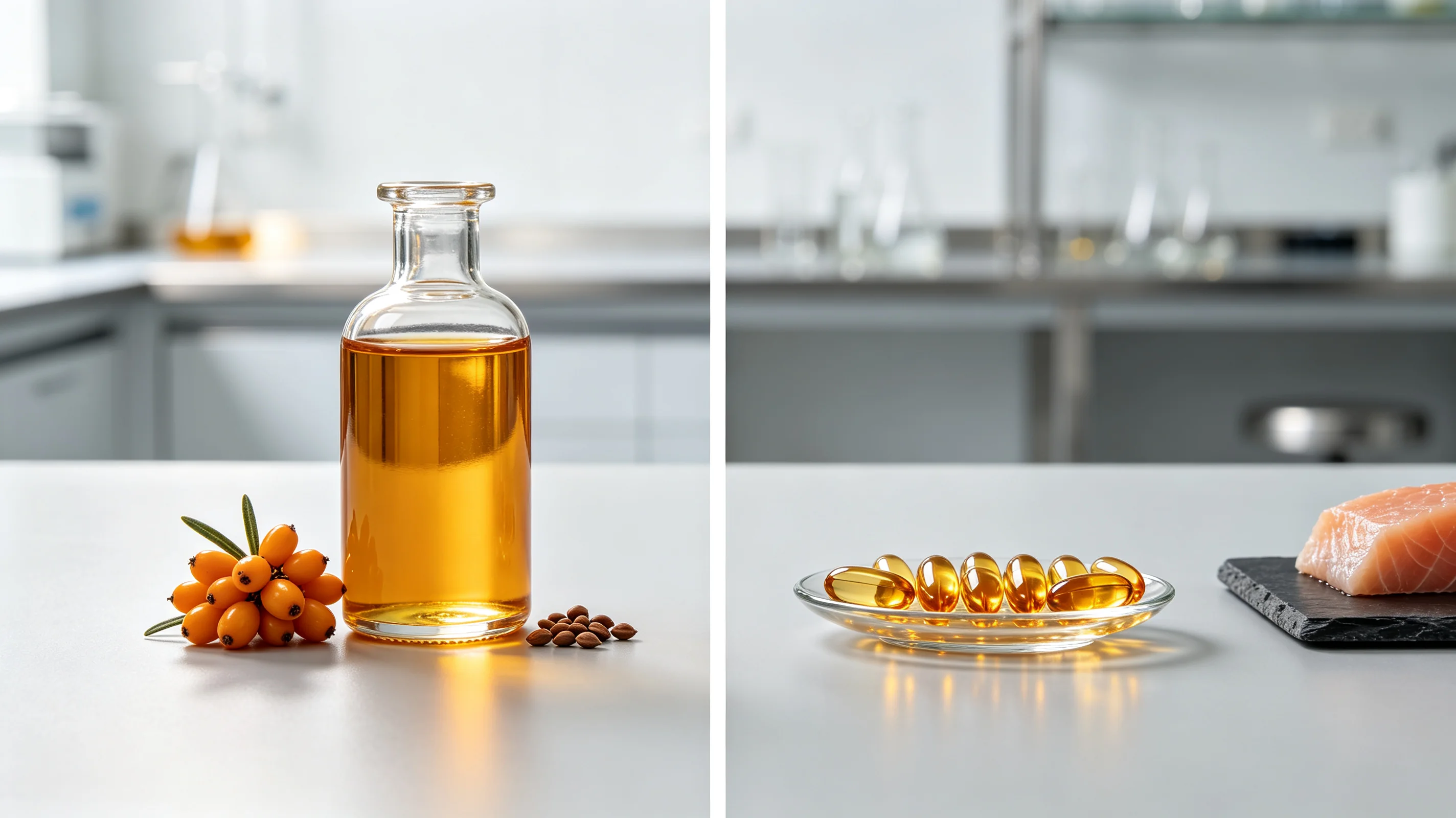
Do not position sea buckthorn seed oil as a milligram-for-milligram fish oil replacement. Position it as a separate plant-based omega-3 category built on three things fish oil cannot claim: a plant source, an omega-3 to omega-6 ratio close to 1:1, and a vegan-friendly skin-health story that opens the roughly 2.5 million vegetarian and vegan consumers in Australia.
Fish oil has owned the Australian omega-3 shelf for two decades, but it carries three structural liabilities: animal origin, fishy aftertaste with reflux, and oxidation risk that shortens shelf life. For a procurement manager or technical director running a private label, those liabilities do not show up as a marketing problem—they show up as churn, complaint handling and reformulation cost.
As a Chinese sea buckthorn seed oil supplier working with Australian manufacturers, we see the same decision pattern every quarter: the brands that succeed are not the ones that argue EPA and DHA numbers with fish oil, they are the ones that pick a customer segment fish oil cannot serve well, then write a positioning statement that survives TGA and ACCC review.
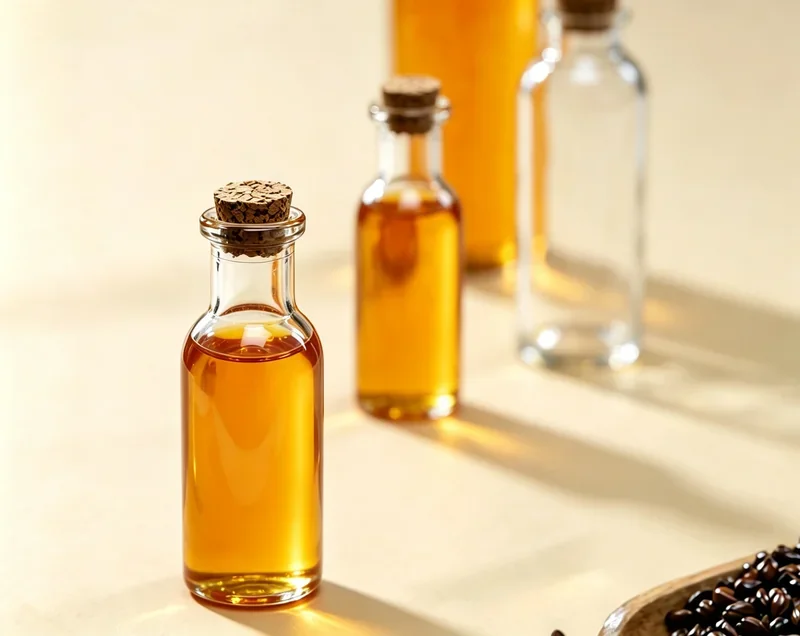
Why Are Australian Supplement Brands Reconsidering Fish Oil?
Fish oil is not losing because the science collapsed. It is losing on three practical fronts that directly hit your P&L.
Animal origin and dietary identity. Australia has roughly 2.5 million vegetarians and vegans, about 10% of the population. That group does not reject fish oil on efficacy grounds—they reject it on identity grounds, and no amount of EPA content will convert them.
Sensory complaints. Fishy aftertaste and reflux are the most common reasons consumers stop reordering an omega-3 soft capsule. They drive the complaint rate your quality team already tracks, and they are expensive because the customer usually does not complain to you—they simply do not reorder.
Oxidation and shelf life. Fish oil is highly unsaturated and oxidation-prone. Once peroxide value climbs, the product develops off-notes well before the printed expiry date, which triggers returns and, in the worst case, a recall conversation you do not want to have.
Layered on top is the regulatory picture. Listed medicines in Australia need an AUST L entry on the ARTG, submitted by an Australian sponsor, with a realistic timeline of three to six months. Label content is policed by the ACCC, and the FSANZ Code sets contaminant limits for food-type products. Positioning decisions that ignore this environment create rework later, not growth now.
For a decision maker, the KPIs that matter here are familiar: complaint rate at or below 0.5%, return rate at or below 0.3%, and gross margin at or above 30%. Any repositioning has to move one of those numbers, otherwise it is decoration.
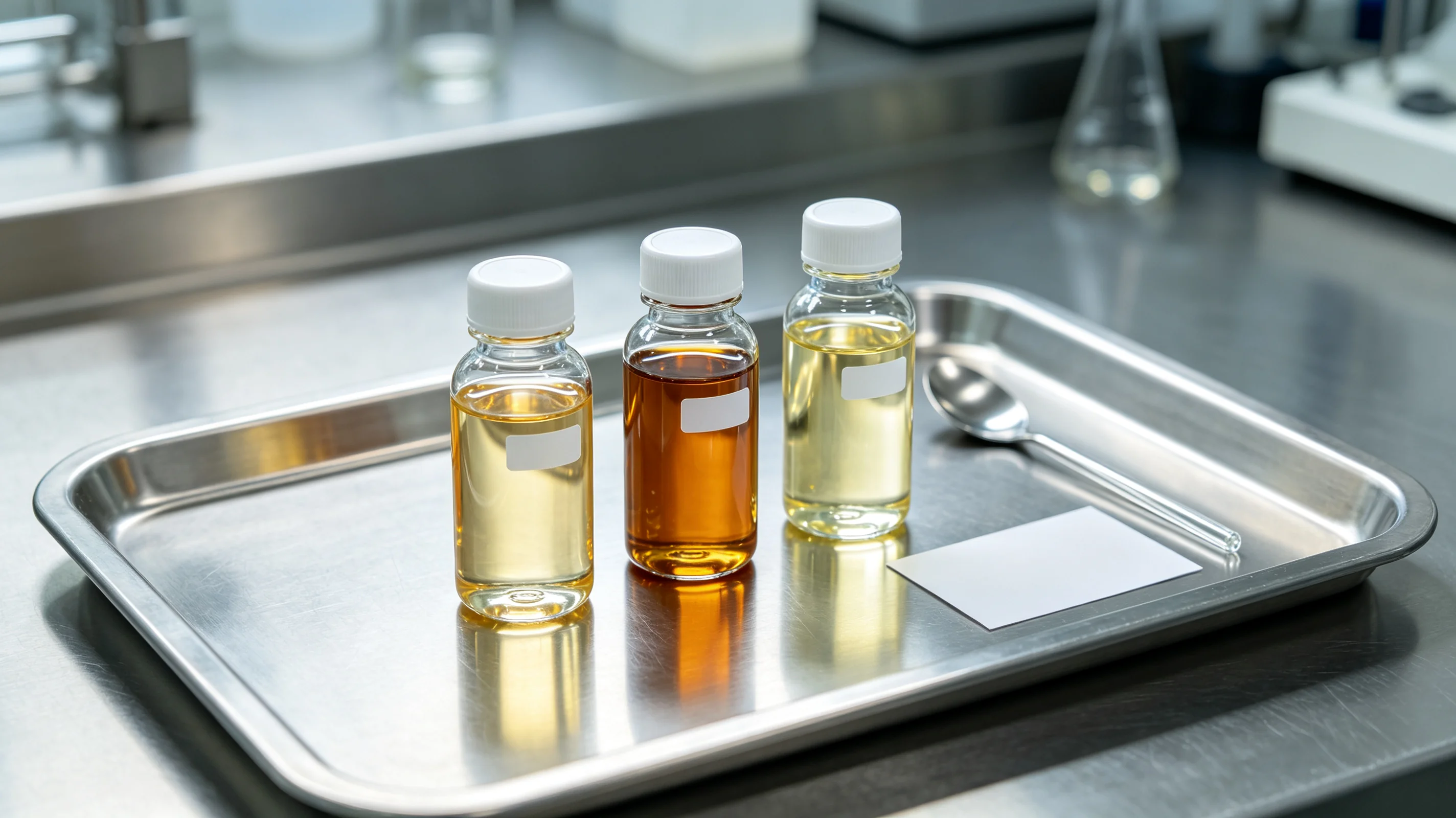
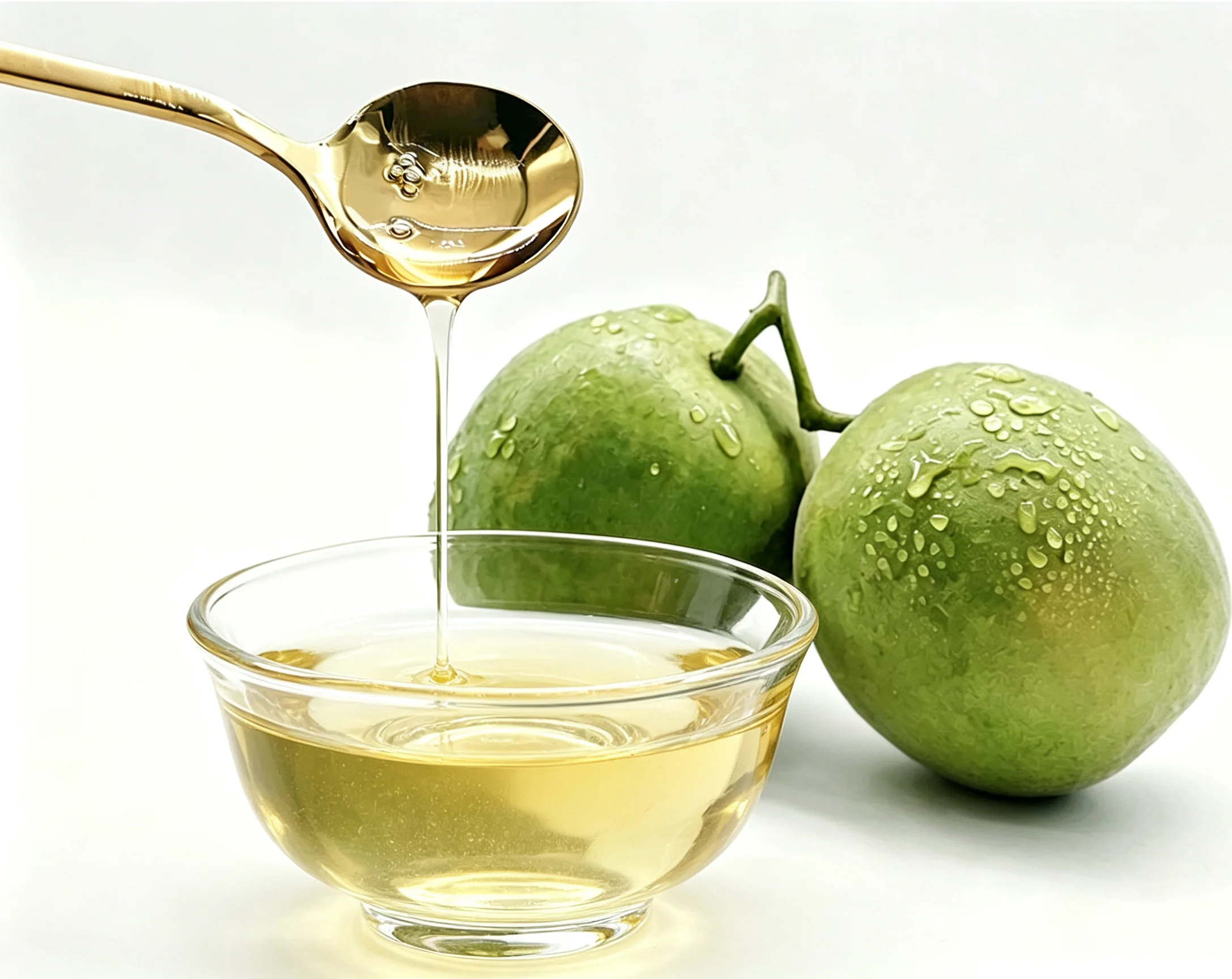
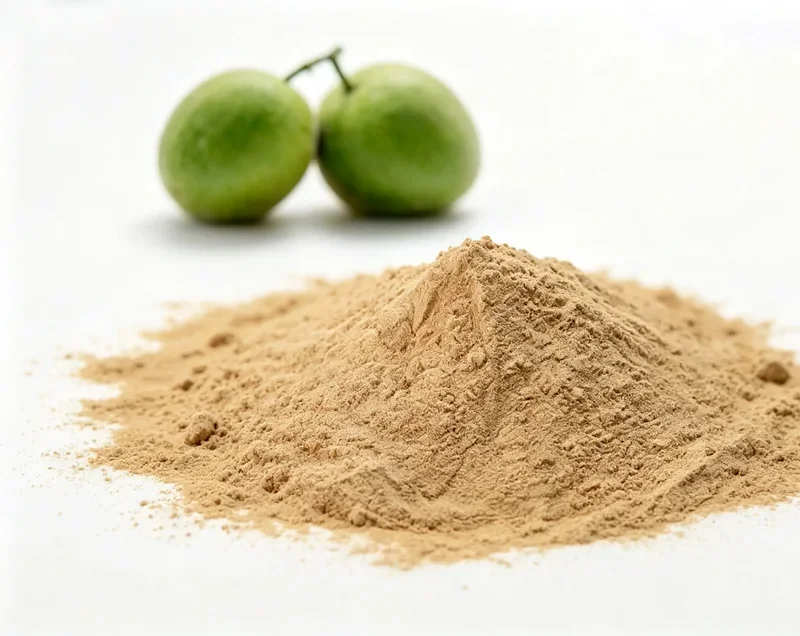
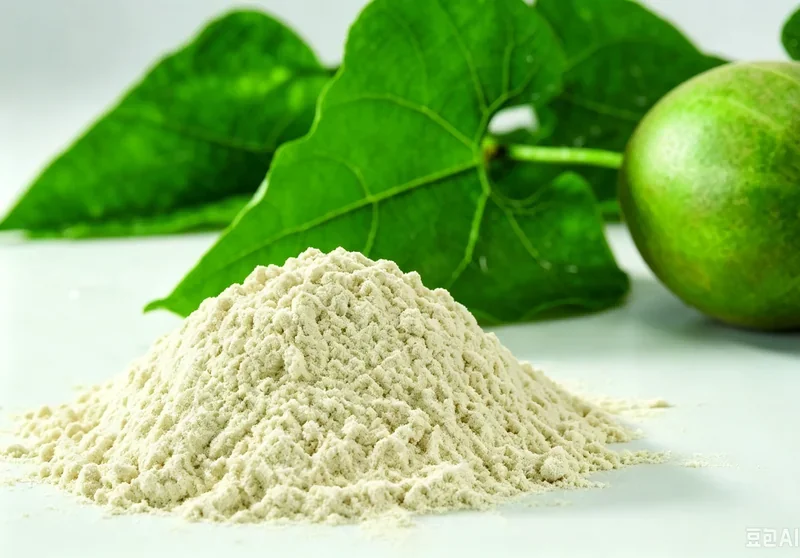
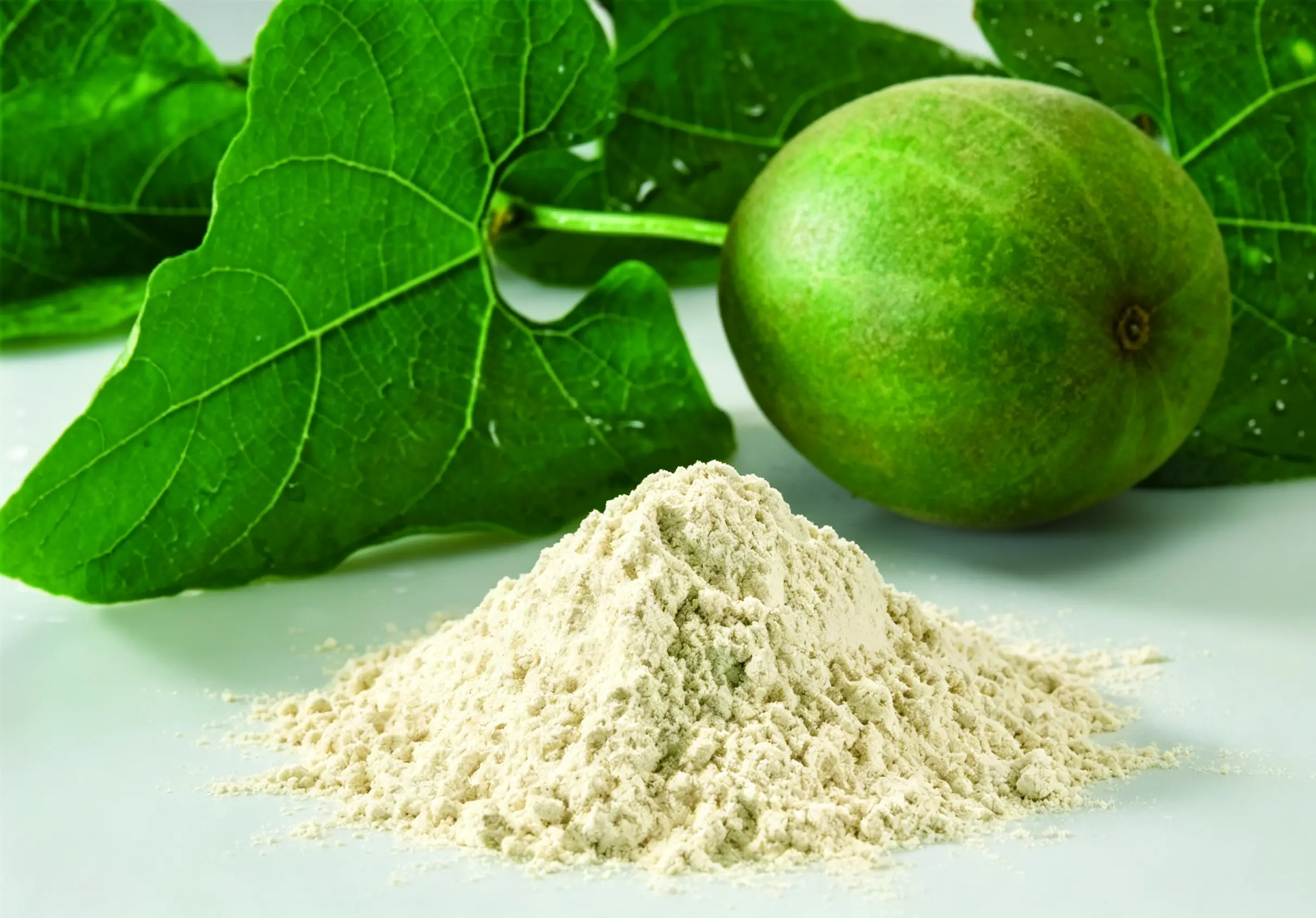
What Does Sea Buckthorn Seed Oil Actually Deliver on Omega-3?
Sea buckthorn seed oil is an ALA-type plant omega-3, not an EPA/DHA oil. Getting that sentence right on your label is the single most important compliance decision in this project, and it is also the foundation of an honest positioning story.
The specification block to put in your RFQ
Ask every supplier to quote against the same block, so that offers are comparable:
| Parameter | Typical target | Why it matters to you |
|---|---|---|
| Omega-3 content | ≥ 30% | Drives the per-capsule active load and your label claim |
| Omega-6 content | 30–38% | Sets the omega-3:omega-6 ratio near 1:1 |
| Omega-3 : omega-6 ratio | ≈ 1:1 | The core differentiation story against single-nutrient oils |
| Peroxide value (PV) | < 10 meq/kg | Freshness at arrival; high PV predicts off-notes and returns |
| Acid value (AV) | < 4 mg KOH/g | Hydrolysis indicator; affects flavour stability |
| Heavy metals | Pb, As, Hg each < 0.1 mg/kg | FSANZ contaminant limits; non-negotiable |
| Pesticide residues | 400+ item screen | Downstream retailer and pharmacy audits ask for it |
| Shelf life | 24–36 months | Determines your printed expiry and inventory window |
| Batch-to-batch omega-3 variance | ≤ ±3% | Protects you from reformulating mid-run |
| Extraction | Supercritical CO₂ | Solvent-free story and lower oxidation starting point |

How Do Plant Omega-3, Fish Oil and Algal Oil Compare?
Buyers rarely choose an oil in isolation. They choose it against the two alternatives already on the brief.
| Dimension | Sea buckthorn seed oil | Fish oil | Algal oil |
|---|---|---|---|
| Source | Plant (sea buckthorn seed) | Marine (fish) | Microalgae |
| Omega-3 type | ALA-dominant | EPA + DHA | DHA (some EPA) |
| Vegetarian / vegan friendly | Yes | No | Yes |
| Typical sensory issue | Mild seed note | Fishy aftertaste, reflux | Low |
| Oxidation sensitivity | Moderate, manageable with nitrogen flushing | High | Moderate |
| Core claim space | Plant omega-3, omega balance, skin health | Heart, brain, eye (EPA/DHA) | Vegan DHA |
| Best-fit audience | Vegans, sensory-sensitive users, skin-health buyers | Mainstream omega-3 users | Vegans who specifically want DHA |
| Relative raw material cost | Mid ($30–60/kg framework level) | Low to mid | High |
| Positioning risk | Being read as an EPA/DHA substitute | Identity and sensory rejection | Price-led competition |
Which Australian Consumer Segments Make the Switch Worthwhile?
Positioning only works if a segment is big enough to fund a SKU. Four segments are worth evaluating.
| Segment | Size / signal | What they want | Claim direction that fits | What to avoid |
|---|---|---|---|---|
| Vegetarians and vegans | ~2.5 million people, ~10% of population | A plant omega-3 that is not a compromise | Plant-sourced omega-3, vegan-friendly soft capsule | Any implication of marine equivalence |
| Sensory-sensitive users | Material share of lapsed fish oil buyers | No aftertaste, no reflux | Easy-to-take, no fishy repeat | Over-promising absorption |
| Skin-health and beauty-from-within buyers | Strong natural beauty category | Omega balance plus topical synergy | Skin health, omega-3:omega-6 balance | Therapeutic skin claims |
| Older adults on multi-oil routines | Large, repeat-purchase heavy | Balanced fatty acid intake | Omega-3:omega-6 ≈ 1:1 balance | Disease-related claims |
What Claims Can You Actually Make Under TGA and ACCC Rules?
This is where most private label projects lose three to six months, so treat it as a gating step rather than a final check.
What you generally can do. Describe the composition factually: omega-3 content, omega-6 content, the ratio, the extraction method. Describe general health maintenance and nutritional support within the listed-medicine evidence framework. State vegan and vegetarian suitability where the capsule shell and all inputs genuinely qualify.
What you cannot do. Make therapeutic claims, imply equivalence to a medicine, or convert ALA content into an EPA/DHA equivalence claim. You also cannot imply treatment or prevention of any condition, and you should not borrow disease-adjacent language from competitor marketing just because it appears on shelf.
Process reality. Listed medicines require an AUST L entry submitted by an Australian sponsor, with three to six months as a working planning figure. Labels must carry ingredients, dosage, warning statements, country of origin, batch number and expiry in English, consistent with ACCC expectations.
Practical tip. Write your positioning statement first, then send it to your sponsor for a pre-submission read. Fixing a claim in a document costs an afternoon; fixing it after artwork is printed costs a quarter.
How Do You Write a Defensible Positioning Statement?
A positioning statement that survives both marketing and regulatory review has five components. Fill them in this order and the wording almost writes itself.
| Component | What to decide | Example input |
|---|---|---|
| Audience | The primary segment you serve | Vegans and lapsed fish oil users |
| Active | What the oil actually delivers | Plant omega-3 ≥ 30%, omega-3:omega-6 ≈ 1:1 |
| Mechanism | Why that matters physiologically | Balanced omega intake from a plant source |
| Format | How the customer consumes it | 500 mg soft capsule, 60 count |
| Proof | What you can evidence | COA full panel, GMP documentation, 24-month retain samples |
- Soft capsule, plant omega-3 positioning: "A plant-based omega-3 soft capsule for Australians who want omega balance without marine oil—omega-3 ≥ 30%, omega-3:omega-6 near 1:1, supercritical CO₂ extracted and vegan-friendly."
- Skin-health positioning: "An omega-balanced plant oil for beauty-from-within routines, formulated so the same oil can power both your capsule line and your facial oil line."
- Replacement-avoidance positioning: "Not a fish oil imitation—a plant omega-3 with its own ratio, its own audience and its own claim space."
Notice that none of these mention EPA or DHA. That is deliberate. The moment your copy invites a milligram comparison with fish oil, you have chosen a fight you will lose and a claim you cannot evidence.
What Does the Cost and Margin Structure Look Like?
Decision makers need the money before the narrative.
| Cost element | Working figure | Note |
|---|---|---|
| Bulk oil, annual framework | $30–60/kg | Professional-grade supercritical CO₂ extracted oil |
| Trial sample | 1–5 kg, premium ≤ 10% | Enough for formulation trials, not for launch stock |
| Soft capsule format | 500 mg × 60 count | Australia's mainstream retail configuration |
| Landed cost variance target | ≤ 5% | CIF plus ChAFTA duty plus GST, all in one model |
| FX exposure | AUD hedged, loss ≤ 3% | Lock the rate or model a 3–8% swing as downside |
| Gross margin target | ≥ 30% | Your own P&L gate |
| Retain samples | 24 months | Free dispute resolution later |
How Do You Validate the Position Before Scaling Up?
A positioning hypothesis is cheap to test and expensive to assume. This checklist is the minimum gate before you commit to production volume.
| Gate | What to verify | Pass condition |
|---|---|---|
| Specification | Omega-3, omega-6, ratio on the actual batch COA | Omega-3 ≥ 30%, ratio near 1:1 |
| Freshness | PV and AV on arrival | PV < 10 meq/kg, AV < 4 mg KOH/g |
| Consistency | Three consecutive samples | Omega-3 variance ≤ ±3% |
| Sensory | Odour and colour, ΔE across batches | No objectionable seed note; ΔE within agreed limit |
| Compliance | AUST L pathway, label draft | Sponsor confirms claim wording is viable |
| Documentation | COA full panel, GMP or manufacturer statement | 400+ residue screen present; GMP evidence on file |
| Stability | Shelf-life data | 24–36 months supported |
| Supply | Framework price, lead time | 4–6 weeks lead time, AUD pricing agreed |
FAQ
Can sea buckthorn seed oil be labelled as a fish oil replacement? No. It is an ALA-type plant omega-3, not an EPA/DHA oil. Label it as a plant-sourced omega-3 and build your positioning on plant origin, omega balance and audience fit, not on marine equivalence.
How is plant ALA different from fish EPA/DHA on the label? ALA, EPA and DHA are different fatty acids with different regulatory treatment. State the omega-3 content you actually have and do not convert ALA into an EPA/DHA equivalent—that conversion is the fastest route to a rejected claim.
Is the Australian vegan segment big enough for a dedicated SKU? Roughly 2.5 million Australians identify as vegetarian or vegan, about 10% of the population. That is a viable primary segment when you add lapsed fish oil users who left because of taste or reflux.
How long does TGA listing take for a sea buckthorn oil supplement? Plan on three to six months for an AUST L entry, and remember that an Australian sponsor must submit it. Build that window into your launch calendar instead of discovering it later.
Is 500 mg × 60 count the right format? It is the mainstream Australian soft capsule configuration and a safe starting point. Custom fill weights and counts are possible once your specification is locked, but validation work grows with each variant.
What premium should I expect on a 1–5 kg trial order? Expect a trial premium of up to about 10% over framework pricing. Treat it as formulation insurance: it buys the data that protects a much larger first production run.
How do I keep batch-to-batch omega-3 within ±3%? Put the variance in the contract, require retain samples for 24 months, and test each incoming batch rather than trusting a single COA. Consistency is a contract term, not a favour.
Do I need a different specification for capsules and topical oils? The base oil can be the same, but the documentation differs. Topical use pulls in AICIS considerations and MSDS requirements, while capsules pull in TGA and GMP expectations. Confirm both paths with your supplier before you order.
Conclusion and Next Steps
The positioning question is really a battleground question. Sea buckthorn seed oil wins where fish oil cannot follow—plant origin, sensory tolerance, omega balance and a skin-health story—and loses where fish oil is strongest, which is the EPA/DHA numbers game. Choose the first battlefield and the claim space, the audience and the margin story all line up.
If you are evaluating this for an Australian private label, four steps will get you from hypothesis to decision:
- Pick one primary segment and one product format, and write the five-component positioning statement around it.
- Order a 1–5 kg trial lot and test omega-3, omega-6, PV, AV, odour and colour against your own gates.
- Send your draft claim wording to your Australian sponsor before artwork is commissioned.
- Negotiate the annual framework price with AUD pricing agreed, so landed cost variance stays within 5%.
Send us your target format, volume band and claim wording, and we will return a specification sheet, a full-panel COA example and a framework quote you can put straight into your sourcing model.
This article was published on 2026-09-08, and last updated on 2026-09-09. The article will be continuously updated.